River Cottage HQ: controversial extension to be decided tomorrow

Daily Mail says yes:
http://www.dailymail.co.uk/news/article-5655473/Hugh-Fearnley-Whittingstalls-River-Cottage-HQ-set-expanded.html

Natural England seems not so sure and there seem to be unresolved drainage issues:

Click to access 010518combineddmcagenda.pdf

(page 107 onwards)

But all should be well as Oliver Letwin MP has written in support.

To be decided tomorrow

“Concerns raised over plan for Exmouth seafront temporary car park”

Owl says: This is what happens when you run a council as a business and not as a public service.

“East Devon District Council (EDDC) is seeking to create 13 spaces on land behind the rowing club, in Queen’s Drive.

The plot, owned by the authority, has previously been used by Exmouth RNLI for storage.

Tony Crowhurst, vice-chairman of Exmouth Rowing Club, has questioned the financial viability of the car park, adding: “There is a lot of work that needs to be done to create a safe car parking space which I don’t think they will recoup.

“The fact that they are going to be using the duck pond for events – we’re going to have a double whammy of people parking to use that area and those parking behind us.”

Mr Crowhurst also questioned the impact the plan will have on the club’s ability to transport their boats across the road to the beach.

He said: “We’re a local club and have got around 80-odd members. We do a lot of things in the community but this will make our ability to transport boats across the sea even harder.

“Already, people will park in front on the club and go dog walking for one or two hours and we can’t get our boats out.

“I would say at least once a week we’re in a situation where we have to ask people to move their cars from the front of our gates.”

An EDDC spokesman said it is aware of the rowing club’s concerns and believes they can be resolved.

Exmouth Town Council’s planning committee is set to discuss the application on Monday (April 30).

EDDC’s cabinet is due to decide whether or not the proposed facility should be included on the authority’s parking places order.

According to agenda papers for the meeting to be held on Wednesday, May 2, at Knowle, Sidmouth, officers are recommending that councillors approve this.

EDDC say they have sought cabinet approval prior to planning permission as they intend to have the car park operational by this summer.

A spokesman for EDDC said: “We are hoping to be able to offer the car park for public use this summer so we are running both of these processes in parallel to save time.”

EDDC planners will make the final decision on the application.”

http://www.exmouthjournal.co.uk/news/exmouth-rowming-club-objects-to-new-seafront-car-park-1-5491480

“18 month delay on the draft Greater Exeter Strategic Plan (GESP)”

Owl says: Seems those traffic jams into and out of Exeter are not going to get better any time soon.

“… The preparation of the GESP has been held up by a number of factors. These include a significant and ongoing review of national planning and housing policies, a very high response to the “call for sites” with over 700 sites made available, and the need to resolve complex transport issues associated with the plan, particularly in the Exeter area, including extensive modelling, roadside interviews and scheme assessment.

“This work is still ongoing and will inform a key element of the GESP strategy. It is not expected that the transport work will be ready before the end of 2018, given the complexities and in particular the need to ensure that Highways England are content with the work.

“The NPPF review is expected to be complete in the summer of 2018. These factors mean that the draft plan is not likely to be ready before spring 2019.

“In order to avoid issues of Purdah associated with the local elections in May 2019 it is therefore now proposed that the draft plan should be published in June 2019.”

The purpose of preparing the Greater Exeter Strategic Plan is to have a joined-up vision and aspirations for the area.

The local authorities are working together, engaging with stakeholders and communities, to prepare a new joint plan.

The GESP will sit above District-level Local and community Neighbourhood Plans, taking a long-term strategic view to ensure important decisions about development and investment are coordinated. …”

https://www.devonlive.com/news/devon-news/18-month-delay-draft-greater-1505396

Austerity cuts – what austerity cuts?

EDDC:

Headcount = 526 as at 1st April 2010
Headcount = 598.5 as at 31st March 2018

http://eastdevon.gov.uk/access-to-information/freedom-of-information/freedom-of-information-published-requests/

Doing more with less? Looks like doing less with more!

Sidmothians balk at contributing £3 m to flood defences: EDDC accused of “fiddling while Rome burned”

Local people and businesses in a coastal Devon town are being asked to help pay towards the cost of a new £9m flood defence scheme.

Sidmouth’s eastern cliffs, which protect the town from flooding, are vulnerable and eroding at the rate of about a metre a year.

East Devon District Council is asking locals and businesses to contribute £3m towards the project.

But many locals do not see why they should pay, and are accusing the council of having wasted time and money over the last decade, “fiddling while Rome burns”.

[EDDC response:]

“East Devon District Council is completely committed to this project. We have already invested over £500,000 of our own money into the research, investigations and all the other necessary work that is done. If we can find another £3m, we can then unlock funding just under £6m from Defra, who are the primary agency concerned with flood protection.”
Tom Wright
Environment Porfolio, East Devon District Council

http://www.bbc.co.uk/news/live/uk-england-devon-43712628

When Northampton County Council went “bankrupt” – Inspectors’ comments on scrutiny an “how others see you”

…”The way that NCC went about its scrutiny function brought very strong words from the inspectors. They noted that a number of councillors told them that they had been refused information. They cite a specific example which I extract below:

Perhaps the clearest demonstration of this unnecessary secrecy during the inspection took place at the Cabinet meeting on 13th February 2018.

3.80 Agenda item 11 was titled Capital Asset Exploitation. This was in fact a proposal to sell and lease back the recently completed HQ building at One Angel Square. This disposal is a potential £50m in value so it would be reasonable to expect a full options appraisal and some clear professional valuation advice as to the likely quantum of proceeds and the ways in which a disposal might be handled to best achieve a best value result. It is likely that much of this information would be exempt information so that there would be a confidential paper appended to the agenda. If that information was not available then it could only be on the basis that it was not being relied on in taking a decision.

3.81 At the meeting a number of questions were raised on these very matters and Cabinet members stated that they were privy to confidential information which supported their recommendation but that it was not available to other members.

3.82 Even if there was a concern about the publishing of confidential information most authorities have protocols and practices which make it possible for key information to be shared and protect the authority. To refuse it outright is just wrong.

Again, during an inspection, it appears that a decision for members to take was incorrectly presented without the necessary evidence.

Lesson 6 – How others see you

A key measure of governance is how well does an authority deal with complaints. During the Inspection the Inspectors commented that most unusually the Local Government and Social Care Ombudsman contacted them. He said that NCC was one of the most difficult authorities to engage with both in time to respond and also in terms of approach to complaints handling learning from mistakes and remedying injustice [32].

Here again the point emerges that services may well be worse than they superficially appear, but there could come a time when the council is on the ropes and at that point others come forward and say what they really think. It is always sensible to treat concerns by the Ombudsman as meriting a chief statutory officers’ agenda spot.”

http://localgovernmentlawyer.co.uk/index.php?option=com_content&view=article&id=34806%3Alocalism-best-value-inspections-and-northamptonshire-county-council&catid=59&Itemid=27

Note: this puts Owl in mind of this what judge said when the Information Commissioner v East Devon District Council Knowle confidential information case was decided in court:

“Correspondence on behalf of the council, rather than ensuring the tribunal was assisted in its function, was at times discourteous and unhelpful, including the statement that we had the most legible copies [of the disputed information] possible. A statement which was clearly inaccurate as, subsequently, we have been provided with perfectly legible documents.”

http://www.midweekherald.co.uk/news/election/heads-should-roll-as-judge-criticises-eddc-1-4075293

EDDC Leader-in-waiting gets his first headache

The new EDDC Leader lives on the Lyme Regis border with Uplyme in East Devon on his patch.

THE Sidmouth Road park and ride planning application has resulted in an acrimonious dispute between Lyme Regis and Uplyme councils.

Uplyme parish councillors have accused their Lyme Regis counterparts of “misrepresenting” what has happened in the run-up to a planning application being submitted for continued use of land off Sidmouth Road as a park and ride. …

… Speaking at a recent meeting, Lyme Regis councillor Steve Miller said that they had been working “extremely closely” with East Devon District Council, which had actually requested that another temporary application be submitted to allow time for the full traffic survey to be carried out.

He expressed disappointment that Uplyme Parish Council had recommended refusal of the application following advice from East Devon district councillor Ian Thomas, who has argued that Lyme Regis has “made no material progress” since previous applications for temporary use of the side and has “failed to address the requirements” set out by the district council.

Councillor Miller also said that the town council had been in consultation with all relevant parties but had not met with Councillor Thomas recently, as he had been unable to attend a number of suggested meetings. …”

http://lyme-online.co.uk/news/lyme-regis/lyme-regis-and-uplyme-councils-in-dispute-over-park-and-ride/

EDDC street trading policy backfires

From “Positive Development for Everyone in Seaton” Facebook page:

“Seaton Markets in 2018 have been CANCELLED.

In view of the recent discussions and correspondence between the Market Organisers and Licensing Officers of East Devon District Council, both the Seaton Branch of the Royal British Legion and Seaton Lions Club have decided with regret, that they cannot proceed with organising Seaton Charity Street Markets in 2018.

These were going to take place on Bank Holiday Monday 7th May, Bank Holiday Monday 28th May and Sunday 15th July. Seaton Carnival Committee have yet to meet to discuss their proposed street market.

This of course will be a financial loss to the charities of between £400 and £800 per market. We have also had the expense of paying DCC Highways a road closure fee of £75 per market.

There will also be a financial loss to Seaton. We estimate that visitors on a market day spend at least £25,000 throughout the town. They patronise the pubs, cafes, coffee shops, ice cream sellers, fish and chip shops, souvenir shops, tramway and Jurassic Centre. This money will not now be spent locally to Seaton, perhaps not even in East Devon.

Although the Act of 1982 is still in force, EDDC interpretation of the requirements since October 2017 have changed. They have introduced a Street Trading Policy which prints out at 20 pages and covers everything possible, putting all of the responsibility onto the market organiser. The policy absolves EDDC of all responsibility. There is also a further 3 pages of another policy for the market organiser. Both of these policies hold the threat of prosecution if the organiser does not comply with the requirements.

The question is why would anyone want to organise a street market when they fully understand the responsibilities which are being passed onto them by EDDC.

EDDC have then combined this with a six page application form which has to be accompanied by an insurance policy, a letter giving permission to use this policy and a map which details exactly where every trader will go in the area being applied for 30 days BEFORE THE EVENT.

EDDC are also asking for proof of permission from the land owner. In the past was DCC Highways but now includes EDDC Street Scene.

To accompany this application EDDC are asking for each trader attending to complete a two page application form, submit photos of their stall and include insurance and hygiene certificate details. They have specified that the hygiene certificate should be level 3, this level applies to restaurants.

If you add all of this paperwork up, it now comes out at over 150 pieces of paperwork for an average street market. Last year we submitted a three page application form and insurance details, that was it.

We also now have to complete a six page application form from EDDC Street Scene which by the way doesn’t co ordinate with the Licensing application form. Street Scene are also asking for a £35.20 fee,so although EDDC Licensing are generously waiving the £20 license fee, it has been substantially increased in 2018 by another department.

The Seaton Charity Street Markets have been held four times a year for over 30 years. They are all organised by volunteers. EDDC increased regulation has turned the organising of a street market into a full time task fraught with extra responsibilities.

It feels as though EDDC have decided to shut down the street markets using over regulation to do so.”

DCC let down child with special needs – compensation and strengthening of procedures required

Unfortunately, DCC under pressure from government has had to cut back on alternative provision for children with special needs including those deemed medically unfit for mainstream school. They are meant to provide 25 hours alternative provision for such young people deemed medically unfit. A parent whose child did not receive alternative schooling took his case to the Local Government Ombudsman

The complaint x which is linked to below – illustrates that DCC has no central person dealing with this type of need, and also did not realise that it should be providing 25 hours of alternative provision.

There were multiple mistakes made in this sad case.

Actions required were:

For the Council to:

Apologise for the fault identified in this statement. It should do this within a month of my decision.

Pay Mr E £300 to reflect the time and trouble he was put to identifying the central point of contact and in finding the Council’s policy on children out of school.

A further £100 for his distress in the Council failing to consider his wish for F to be educated outside the home and £200 for the uncertainty of not knowing whether F could have had more contact with his peers.

I note the Council has not yet made the payment of £400 to reflect the delay in its complaints handling; it should make this a payment of £500 to reflect its delay in dealing with the third complaint. These payments should be made within three months of my decision.

Pay F £1,600 to reflect him receiving insufficient amounts of education until he was electively home educated. This payment should also be made within three months of my decision.

For the Council to consider amending its procedures to:
Check with schools that the people employed to support individual children with special educational needs, are appropriately trained;

Consider recommendations made in statutory guidance are acted upon as soon as possible or to explain why practice is not being changed;

Receive reports about children educated out of school to check they are receiving the full amount of education to which they are entitled.

Consider parental wishes when arranging alternative provision. Even if those wishes cannot be met, the Council should explain why.

Ensure procedures are robust enough to ensure the Council obtains documents promptly and sends out decision letters and drafts as soon as possible.

Ensure LADOs are appropriately trained to enable them to fulfil this role.

Ensure its complaints procedure is robust enough so that deadlines are adhered to.

These aspects should be considered within four months of the date of my decision.

https://www.lgo.org.uk/decisions/education/alternative-provision/16-011-798#point1

How much do EDDC and DCC councillors get paid?

In answer to a query”

EDDC:

Click to access members-allowance-scheme-current.pdf

DCC:
Owl cannot find an up-to-date page showing DCC allowances – this one from 2014/15 is the most recent found:

https://new.devon.gov.uk/factsandfigures/data-table/?postId=councillor-allowances-and-expenses-2014-2015

EDDC HQ builder in trouble – “problems emerged two years ago”

Owl says: due diligence?

September 2017:

“Construction of East Devon District Council’s new headquarters in Honiton is progressing well with groundworks completed and the building foundations underway.

The council is expected to be working in the new premises by December 2018 and contractors, INTERSERVE Construction Ltd, are on schedule to complete on time. …”

http://eastdevon.gov.uk/news/2017/09/foundations-in-place-for-new-east-devon-district-council-hq-in-honitons-heathpark/

TODAY:

Outsourcer Interserve seeks vote for borrowing increase

INTERSERVE will call a meeting of shareholders to seek approval to increase its borrowing limits and prevent it breaching its banking covenants.

The construction and public services group says that it needs higher borrowing levels because of expected “significant balance sheet writedowns”, which it expects to report in full-year results delayed until the last day of this month, only two days after the meeting.

INTERSERVE is one of Britain’s biggest outsourcing companies, cleaning schools, hospitals, government offices and railway stations. It also operates facilities for the ministries of defence and justice. It has annual revenues of £3.2 billion and employs 80,000 people.

It has been feared that INTERSERVE could become another Carillion, a larger rival that went bust at the turn of the year after the failure of several building contracts. Interserve is on the government’s watch list, with Deloitte, the accounting firm, having been brought in to monitor the company. EY, another of the Big Four accountants, is advising Interserve and its lenders.

The business’s problems emerged two years ago after the failure of a venture to build energy-generating incinerators led to it having to pay out £195 million in compensation and penalties.

In a statement to the stock market, Interserve said that at its year-end, its net debt had risen to £513 million. …”

Source: Times (paywall)

“Ain’t too proud to beg”

Hot on the heels of this article:

“A donation box installed on Sidmouth seafront that has been removed for maintenance will not be reinstated as the repairs are ‘too costly’.

A Freedom of Information Request submitted to the council had revealed that so far the council has received less money in donations than the cost of installing the box itself. …

… The cost of the sign and its legs were £276, and the cost of the box was £125, and the amount collected to date is £165.75, the Freedom of Information Request reveals. …”

https://www.devonlive.com/news/devon-news/sidmouth-donation-box-cliff-fall-1416667

comes this cartoon from the current Private Eye:

Expansion of Cranbrook not going down well with – Cranbrook

“A total of 138 consultation responses were received from town and parish councils, councillors, specialist bodies, developers and the public. A wide range of issues were raised, including technical concerns about transport issues, such as problems providing vehicle access to some parts of the proposed expansion areas and how rail services can be improved to deliver a half hourly service into Exeter.

It was also noted that some additional land had been put forward by landowners for development through the consultation and this now had to be considered for inclusion in the plan.

… People were mainly concerned about the location and extent of development to the south of the London Road, particularly where this intrudes into Rockbeare parish and the Green wedge that was designated to prevent settlement coalescence (joining up) between Cranbrook and the village.

The community at Rockbeare raised strong concerns with these proposals, which also conflict with the emerging Rockbeare Neighbourhood Plan that has recently been out to consultation. Members were advised that this development was important for bringing the London Road into the town, as well as for creating a sense of place along the road as an entrance to Cranbrook….”

http://eastdevon.gov.uk/news/2018/03/councillors-review-report-on-cranbrook-plan-development-plan-document-dpd/

Risk of green wedge between Cranbrook and Rockbeare being swallowed up despite Local Plan rules

“Cllr Rob Longhurst said: “The main thing I would be concerned with is the idea that a green wedge could be disposed of if it doesn’t fit. It was put there for a reason after long debate and I think it is wrong to suddenly discard it as being inconvenient.”

Cllr Mark Williamson said: “It is so clear in the strategy of the Local Plan that it only takes up a single sentence, saying within green wedges, development will not be permitted. There are six green wedges in the Local Plan so if this was allowed then there will be sleepless nights around the district, where the other green wedges are, particularly around Seaton and Colyton.”

https://www.devonlive.com/news/devon-news/concerns-raised-building-green-wedges-1400152

EDDC to borrow a minimum of £3.4 million and up to £8 million to “improve” Greater Exeter enterprise zone

Owl says: it seems western East Devon/Greater Exeter is to thrive at the expense of eastern East Devon; more of everything for Greater Exeter, less of everything for Lesser East Devon.

“Improved bus services, a new park-and-change car park, and improvements to Exeter Airport are all on the cards.

East Devon District Council’s Cabinet is being asked to approve borrowing of nearly £3.5m to help accelerate the projects in the Enterprise Zone.

The Exeter and East Devon Enterprise Zone consists of the Exeter Science Park, the Skypark, the Exeter Airport Business Park and Cranbrook Town Centre.

A report to the cabinet is seeking approval for £3,391,250m to be borrowed against future ring-fenced business rate income.

The report, that goes to the Cabinet on Wednesday, April 4, written by Naomi Harnett, Enterprise Zone Programme Manager, says: “While not yet fully developed and appraised it is considered that these projects are also likely to make a substantial contribution to the achievement of the objectives of the Enterprise Zone.

“The Enterprise Zone designation is a powerful means of accelerating the delivery of new commercial space and jobs in the four sites in the West End of the District.

“The more that can be done to accelerate the delivery of new commercial space the greater the impact there will be both in terms of business rate income and wider economic benefit. Work has focused on developing projects that help to overcome identified barriers to delivery and/or have a catalytic impact in terms of accelerating the pace of new commercial development.

“Approval is sought for the funding of an initial set of projects that are considered to contribute substantially to meeting the objectives for the EZ.”

The report seeks approval for £3,391,250m to be borrowed against future ring-fenced business rate income.

The four proposals that the council is being asked to invest in are:

1 – An enhanced frequency bus service (30 minute at peak) connecting Exeter to the Enterprise Zone area. This includes connections via the key transport nodes of Exeter St Davids and Exeter Airport. The service is due to commence at around 5am and run through to 11pm, with the intention that this fits with key shift patterns and flight times. Some of the services will also continue to Woodbury and Exmouth. The service builds on an existing service tendered by Devon County Council and the intention is to subsidise this for an initial period of 3 years starting from Summer 2018. The scheme would cost £536,250 and would be delivered by Devon County Council.

2 – A 309 space park-and-change car park located at the Exeter Science Park, alongside bike lockers and an e-bike docking station. The facility will both support the development of the Science Park and contribute to the wider transport strategy for the area. It is anticipated that the works will complete during summer 2019 and be delivered by Devon County Council, and would cost £2.4m

3 – An upgrade to the Exeter Airport Instrument Landing System. The current system installed in 1997 has now reached the point where there is no further operational tolerance to accommodate additional nearby development. Subsequently this is a significant barrier to development coming forward particularly at both Skypark and the Airport Business Park extension. The scheme would be delivered by Exeter Airport and cost £1.4m

4 – An upgrade to Long Lane, the road that runs immediately to the south of the airport. It is the principle means of access to the Airport Business Park extension and is sub-standard to the point where no further development can proceed until it is improved and is therefore a significant barrier to one of the four EZ sites coming forward. An initial sum of up to £100,000 is sought in order to complete the scheme design and would be delivered by Devon County Council.

The investment in the enhanced bus service and park and change facility would be in the form of a grant, and a forward funding mechanism is proposed to secure the timely upgrading of the Instrument Landing Systems at the Airport. The costs of this can then be recouped as development proceeds.

The report also request that the cabinet agrees the principle of borrowing up to £8m against ringfenced business rate income to fund the delivery of projects and makes this recommendation to Council

Further papers setting out specific investment proposals in relation Cranbrook town centre and Exeter Airport would come to the Cabinet at a later date.

Could Sidford cope with a new industrial site? A 75 minute traffic gridlock says not!

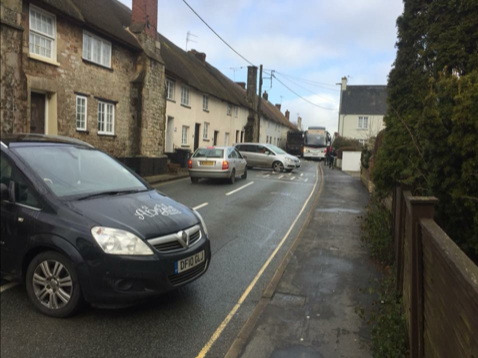
The idea of an industrial complex in Sidford has not died – it could return at any minute.  This was the situation when two large vehicles met on one of the narrowest parts of the road  – vehicles were trapped for more than an hour … imagine if there had been a medical emergency or fire during that time …

Sidmouth DCC councillor Stuart Hughes has responsibility for transport issues in Devon.

A picture is worth a thousand words …

Another county moving to unitisation despite district council protests

Owl wonders what is going on under the radar in Devon and whether district councils are more worried about loss of power and influence rather than economic considerations … recalling that EDDC Tory Leader Paul Diviani rejected the idea of a Jurassic national park with Dorset because EDDC would lose control over planning.

“District councils in Buckinghamshire have responded angrily to government plans to abolish them.

Communities secretary Sajid Javid said yesterday that he was minded to agree a proposal from the county council to create a county-wide unitary council.

In a joint statement, Aylesbury Vale, Chiltern, South Buckinghamshire and Wycombe councils said: “While we are extremely disappointed, the ‘minded to’ decision is not set in stone, and we will be making the strongest possible representations to the secretary of state that this decision is not the right one.

“We don’t believe that this decision is in the best interest of our local residents, businesses, community groups, parish councils and various other stakeholders across the county and, based on our own engagement, we don’t believe it has strong local support.”

The districts had made a rival proposal under which Aylesbury Vale would become one unitary and the other three councils would form another.

They said this recognised differences in the economy, jobs, growth and housing markets across the county.

“A single large unitary will mean major opportunities will be missed in these areas and that a one size fits all model will not mean the best deal,” they said.

“We also question the savings the single unitary model claims to deliver.”

http://www.publicfinance.co.uk/news/2018/03/buckinghamshire-councils-angry-governments-unitary-plans

What if parishes controlled most local services?

Owl has been thinking – always dangerous and always upsetting some people! This time it is about unitary councils and how they might work for the “little people” (or even little owls).

It seems that almost everyone now agrees they will save money, by removing a tier of government. But, when and if they do, how do we safeguard ourselves from being hijacked by the likes of Local Development Partnerships, big business and greedy speculators (some of whom, unfortunately, are likely to be unitary councillors and some who could be all three!).

It seems the absolute key is the devolving of as much decision-making power as is practical to parish level.

Local power brokers (we know who they are!) will inevitably resist this as much as possible. Cornwall’s unitary system is generally accepted to have been something of a success, but the big criticism is the centralisation of decision-making, and lack of democracy.

If we devolve power to parish level, surely this should in lude planning – as the more local it is, the more likely it is to work. It is, of course, a myth that this will lead to nimbyism. Most communities are happy to accept new building – they just don’t want nasty little boxes in the wrong place at inflated prices.

It is obvious that we need to reduce the tiers of government. Look what we have locally: parish council, EDDC, Greater Exeter, the GESP area (which is not the same as it includes Mid Devon), County Council, the LEP (together with its new proto-authority/the Joint Committee), England, the UK, the EU. That makes nine levels of bureaucrats all reinventing the same wheels (and charging for it!).

We are leaving the EU (probably), and it seems to Owl we could quite happily exit EDDC, Greater Exeter, GESP, and the LEP without any loss – which would leave us with four. Parish, County, England, UK. Plenty enough. And imagine the savings!

We could devolve as much as possible to parish level, provided those parishes were of a certain minimum size, say 10,000 population. Parishes could cooperate with neighbouring parishes in the provision of some services such as environmental health. Most such as street cleaning, highway maintenance of everything except A roads, and non-strategic planning could be left to the parish.

But it would mean powerful (and often rapaciously greedy) people being forced to lose that power for the greater good.

Aaahh, well it was good to dream!

District councils say they are being starved of most government funding

“The fair funding review will fail unless any reforms come with more money for local government, an umbrella-group has warned.

The Local Government Association said funding cuts had forced councils to divert ever-dwindling resources from other services to prop up adult social care and children’s services.

“Ultimately, the review will not be successful and lead to a sustainable outcome if it is not introduced alongside additional resources,” the LGA wrote in their response to the fair funding consultation, which ended on Monday.

“We estimate that councils face a funding gap of over £5bn by the end of the decade, on top of a £1.3bn pressure to stabilise the adult social care provider market.”

It called for 100% retention of business rates to try to plug the gap. The government confirmed in the draft local government settlement in December last year it is reducing the amount of grant it gives to councils and will allow them to keep 75% of business rates by 2020-21.

But the LGA said business rates retention and the calculation methodology for the four-year settlement had introduced “further layers of opacity” to a system already complicated by the use of 15 formulae and 120 indicators.

“It is positive that the government is attempting to reduce the number of cost drivers and formulae used in the relative needs assessment,” the LGA said. “It is important that complexity is only added where it is unavoidable and where it has a material positive impact on fairness.

“However, the right number of formulae and cost drivers must ultimately be driven by evidence or the outcome will not be seen as ‘fair’.”

The County Councils Network said any new formula arising from the review “must be capable of addressing spikes in demand for social care services”.

Its finance spokesperson Nick Rushton, leader of Leicestershire County Council, said: “This is a once in a generation opportunity to reform the system for the better.

“If we focus on the evidence and avoid introducing unnecessary complexity we may actually make something that stands the test of time. If not we will be back here sooner than we think.”

The District Councils Network said most districts would stop receiving revenue support grant by 2019-20 and were “continuing to see reductions in their core spending power for the whole period, compared to other councils who are all seeing an increase”. …”

http://www.publicfinance.co.uk/news/2018/03/local-government-funding-changes-will-fail-without-extra-resources

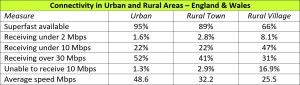
Rural extra-fast broadband grants exclude East Devon

“Thirteen areas win funding for broadband

Thirteen areas have been awarded a share of £95 million to help with the rollout of ultrafast broadband – which delivers internet speeds of up to 1GB per second – which is currently only available to three per cent of the population. The successful bidders include Manchester, London, Blackpool, Cambridgeshire, Coventry, Mid Sussex, North Yorkshire, Portsmouth and Wolverhampton.”
Source: i p10

and full list:
https://www.ispreview.co.uk/index.php/2018/03/brief-summary-13-new-uk-full-fibre-local-network-projects.html