Growth? Not in retail

Local Plans, Local Enterprise Partnership – constantly push growth, growth, growth. But REAL figures tell a different story – with possible big job losses in retail fairly soon across the country, but particularly in retail in our area, where is this ” growth” in jobs and housing construction coming from and going to? There will be no growth if new jobs in one sector are offset by losses in other areas.

“The UK high street suffered its quietest Christmas in almost two decades new figures have shown, just hours after clothing giant Next announced a sharp slump in festive sales.

Retail footfall was at its lowest December level since 1998 – the year consultancy Ipsos Retail Performance first started its Retail Traffic Index.
Depressing updates emerging from retailers suggest that the decline in store footfall wasn’t converted into a lift in online sales and consumers cut back on spending all round. …

… The South West of England and Wales suffered the biggest footfall drop of all the regions, with a year-on-year decline of 14.4per cent.”

http://www.thisismoney.co.uk/money/news/article-4088176/UK-high-street-suffers-quietest-December-TWO-DECADES-shoppers-cut-spending.html

“Exmouth regeneration board chief threatens to ignore key community group”

A press release from “Save Exmouth Seafront”:

“Councillor Skinner’s initiative with the previously unknown ‘Exmouth Creative Group’

Councillor Skinner, Chair of the secretive Exmouth Regeneration Board has threatened to ignore both the Save Exmouth Seafront (SES) Group and the Exmouth public as he goes to a previously unheard of group of elites for their opinion on the seafront.

In recent months Cllr Skinner has repeatedly avoided engaging with the Exmouth public. He has been avoiding a public Q&A meeting and stated at the East Devon District Council (EDDC) Full Council meeting of 21/12/16 that independent consultation with the public, as requested in the Town Poll, will not happen.

It has now come to light that while Cllr Skinner consistently refuses to engage with the Exmouth public he has meanwhile been in contact with the previously unheard of ‘Exmouth Creative Group’ and asked them to ‘create a vision for Exmouth’, and ‘develop proposals to deliver this vision’. Spokesperson for SES, Louise MacAllister reacted to this news:

“When I heard that Cllr Skinner was seeking the opinion of Exmouth residents regarding the future of the Exmouth Seafront I was really pleased. This is exactly what SES have been requesting through an open and independent consultation.

However I soon learned that Cllr Skinner is liaising only with a group called the ‘Exmouth Creative Group’. There are many established community groups in Exmouth with an interest in the seafront who have not been asked for their opinion.

The ‘Exmouth Community Group’ does not appear to pre-exist Cllr Skinner’s contact with the group. This is concerning as the Exmouth public made themselves very clear through the Town Poll that they want to be consulted, and yet the public are now being ignored in favour of this unknown group.

It is an incredibly disappointing stance from the Chair of the Exmouth Regeneration Board who consistently ignores my emails and fails to live up to the responsibility of his role”.

SES asked the following questions of Cllr Skinner with regards to the Exmouth Creative Group:

– What criteria did you use when selecting potential groups to communicate with?
– Why does this one group get to play a role when you are so dismissive of majority opinion?
– Who is in this group and how does one become a member?
– Why did you select a previously unknown group for this important task?
– With whom in the ‘Exmouth Creative Group’ did you broker your links?

In response Cllr Skinner rudely dismissed the questions posed with the bizarre statement that he is:

“Not a delegate, I am a councillor and am certainly not in the business of responding to you within your time scales or even at all if I so choose.”

So just as Cllr Skinner has dismissed the opinions of the wider Exmouth public, he has made it clear he will respond to a key community group only if he so chooses, and in doing so makes it clear that he does not value the group, or the wider public that SES strive to represent. Meanwhile, he has gone to an unknown group with a brief to design a vision for Exmouth Seafront.

SES strongly welcome the opportunity for the people of Exmouth to feed into ideas on the future of the seafront but not when it is conducted behind closed doors and solely with a previously unknown group who are seemingly as secretive as the Exmouth Regeneration Board members themselves.”

“Brexit ‘zombie legislation’ could damage wildlife and farming, MPs warn”

“Brexit could harm the UK’s wildlife and farming, according to a cross-party committee of MPs, with key protections left as ineffective “zombie legislation” and farmers facing a “triple jeopardy” of lost subsidies, export tariffs and increased competition.

A new report from the environmental audit select committee warns that many of the rules governing food production and the environment in the UK come from EU law and that weakening of these rules would damage the countryside and reduce the viability of farms, food security and safety.

The MPs said that for the government to meet its manifesto commitment to “be the first generation to leave the environment in a better state than it found it”, ministers must commit to passing a new Environmental Protection Act before it triggers article 50 and starts the formal process of leaving the EU.

The MPs said it was concerning that the environment secretary, Andrea Leadsom, gave no reassurance that farmers would receive subsidies after 2020. But the report also recommended that if a new subsidy regime was put in place, it should focus less on direct income support to farmers and more on delivering public goods, such as preventing flooding, tackling climate change and boosting wildlife.

Attenborough urges UK to use Brexit to improve wildlife protections
“Changes from Brexit could put our countryside, farming and wildlife at risk,” said Mary Creagh, chair of the environmental audit committee (EAC). “Protections for Britain’s wildlife and special places currently guaranteed under European law could end up as ‘zombie legislation’, even with the great repeal bill.”

Creagh said food, animal welfare and environmental standards had to be maintained as the UK seeks new trade deals with other countries. “The government must not trade away these key protections [and] it should also give clarity over any future farm subsidies.”

There are about 800 pieces of EU environmental legislation, covering wildlife and habitats, water quality, farming, food and fisheries. The government’s great repeal bill intends to transpose all those rules into UK law, but Leadsom told the EAC that about a third would be difficult to transpose.

The EAC said that, without pre-emptive action, these rules would end up as “zombie legislation”, with no body to enforce them, no updates and easily eroded by ministers via parliamentary statutory instruments, which receive minimal scrutiny from MPs.

The EU’s common agricultural policy provides £3.5bn a year in subsidies to UK farmers, making up more than half of their income, and the MPs said Brexit posed a “triple jeopardy” for farmers. Firstly the loss of subsidies would threaten the viability of some farms. Secondly, new export tariffs would cut farm incomes and, thirdly, new trading relationships could lead to competition with nations with lower animal welfare, food safety and environmental standards.

If the UK chooses not to be part of the EU single market, Tim Breitmeyer of the Country, Land and Business Association told the EAC that lamb exports to Europe would face tariffs of 30% and that beef export tariffs could be above 50%.

Even if the UK remained in the single market, the MPs said crucial EU directives such as those protecting habitats, birds and beaches, would have to be replaced as they are excluded from that agreement. “The government should safeguard protections for Britain’s wildlife and special places in a new Environmental Protection Act,” said Creagh.

A government spokeswoman said: “The UK has a long history of wildlife and environmental protection and we are committed to safeguarding and improving these, securing the best deal for Britain as we leave the EU.”

Vicki Hird, from Sustain, an alliance for better food and farming, said: “MPs have correctly identified a huge risk to the UK farming system and environment from Brexit and new trade agreements. Without environmental safeguards in place, [this] would mean major damage to the natural environment – the soils, pollinators and water – on which farming and everyone depends.”

Sam Hall, at the liberal conservative thinktank Bright Blue, said: “Brexit is an opportunity to improve the UK’s environment. The MPs rightly suggest new legislation could be needed to guarantee existing protections post-Brexit. But a new bill could go further and increase the level of ambition for the natural environment”, for example with tougher pollution controls.

Sam Lowe, at Friends of the Earth, said any changes to environmental protection must be subject to full parliamentary scrutiny and not made via statutory instruments: “No one voted to ‘take back control’ for the UK parliament, only to hand it straight over to a minister, brandishing a red pen, with the power to delete vital nature protections on a whim.”

https://www.theguardian.com/environment/2017/jan/04/brexit-zombie-legislation-damage-wildlife-farming-mps-warn

“The 2017 local elections: time to bury councillors, or to praise them?” asks Cornwall blogger

“We are now less than five months away from one of our infrequent four-yearly opportunities to express our democratic view of Cornwall Council. As the Council’s leadership desperately clings on to the tiger of housing growth, no doubt people will be asking themselves as local elections near, ‘what have councillors ever done for us?’ Others won’t ask; they’ll be loudly calling down a plague on all of them.

This may be a bit blunt. I’m sure most councillors believe they’re doing their best for Cornwall and its communities and are not, as so many assure me, in the pay of upcountry developers and determined to transform our land into a Little England by the Sea as quickly as possible. The more proper question therefore becomes ‘why have councillors been unable to raise credible opposition to population growth policies and developer-led planning?’

While not actually wishing to bury councillors, it’s surely time to remind some of them of a few home truths. Many councillors are clearly beyond redemption, uncritically swallowing wholesale the advice of their officers, kowtowing to London’s orders with scarcely a whimper, or perhaps not possessing the wit or wisdom to challenge conventional ‘mainstream’ policies.

It’s the others I worry about.

Over the past month or so I’ve heard from three Cornwall Councillors (from different party groups), all genuinely concerned for the future of their land, all deeply worried by the lemming-like drive for massive building projects and renewed people-led growth that threatens to transform the landscapes around our towns and villages. Yet none of them seemed to have discussed their concerns much with fellow councillors across party lines who might share their views. None seemed fully aware of campaigns outside their particular patch. Intra-councillor communication is one problem, while external communication is the second.

Why are councillors unwilling to take a lead and organise? Why can’t those who rightly question the Council’s direction of travel forget their party labels and coordinate their opposition? Instead of moaning about the constraints imposed by central government, constraints that are all too real, why don’t they do more to publicise their dilemma? Is it not possible to oppose central government diktats publicly, while educating Cornish voters about the straitjacket the Government imposes? Can’t they do more to point out how the Council’s leadership complies too readily with those diktats?

At MK’s [Mebyon Kernow – The Party for Cornwall] recent Annual Conference for example, their councillors admitted that they ‘did too much without shouting about it’. So why not do more to shout about it? First, they could surely make more effort to publicise what they’re doing. Second, they could pro-actively disseminate information they come across that illustrates the absurdities of the current Council strategy or the various ways in which Cornwall is being treated unfairly. Look at the MK website and you’ll find surprisingly little such information.

Surely MK and other councillors could build more bridges to campaign groups and campaigners outside, who can then spread this information through the grassroots. There’s a huge amount of energy and anger building up in local campaign groups as people see the changes unfolding around them and begin to realise what the elites have in store for us. But there’s also a lot of confusion and ignorance as well as anger.

The danger is that people take a blanket view and blame ‘the council’ and all councillors for what’s happening. We’ve seen over the past year where this can lead, if left to stew unfocused in this way. People will vote for the first demagogue that comes along. They end up protesting against the establishment by electing slightly more marginal members of the same establishment, some just chancers and others who deliberately fan anger and fear into racism and bigotry and offer simplistic solutions but no substantial remedy for a system that’s unfit for purpose.

To prevent that, we need a grassroots populism, also anti-elitist, but confident in its ability to replace the failed elites, not with a set of chancers from similar backgrounds but with genuine and credible voices of localism and community democracy.

Councillors who can see through the Council’s corporate agenda need to stand up, join with campaigners and begin to discuss how to make the future of Cornwall an issue in next year’s local elections. We can’t let things go on the way they are. So how do we best challenge the people-led growth consensus that grips our policy-makers and replace it with a more sustainable vision of Cornwall? Who’ll make the first move?”

https://cornwalldevelopersparadise.wordpress.com/2016/12/12/the-2017-local-elections-time-to-bury-councillors-or-to-praise-them/

Could this sort of protest persuade our Tory MPs to back the NHS?

Conspiracy theorists and fake news enthusiasts are already saying that this was organised to make Trump look good – hhhm! And can we see parallels here – nationally and locally?

“WASHINGTON ―

After a torrent of bad headlines, countless phone calls to member offices, and two tweets from President-elect Donald Trump, House Republicans dropped their plans to gut the Office of Congressional Ethics Tuesday, just minutes before the House was set to gavel in for the 115th Congress and adopt their rules package for the next two years.

The amendment ― authored by Judiciary Chairman Bob Goodlatte (R-Va.) ― would have placed the independent congressional ethics office under the oversight of the House Ethics Committee, changed the OCE’s name and barred the office from releasing reports to the public. In effect, it would have neutered Congress’ most aggressive watchdog.

The decision to strip the Goodlatte amendment came just before noon on Tuesday as Republicans planned to begin the 115th Congress. Earlier in the day, responding to numerous news reports about Republicans gutting the OCE, Trump asked in a tweet whether Republicans really had to make the “weakening” of the ethics office their first order of business, though he also didn’t necessarily come out against the idea of eventually overhauling the OCE.

Ethics groups were quick to criticize House Republicans for the effort. A coalition of groups including the Campaign for Accountability, Citizens for Responsibility and Ethics in Washington and the League of Women Voters sent a letter to House Speaker Paul Ryan (R-Wis.) and House Minority Leader Nancy Pelosi (D-Calif.) on Tuesday calling for the reauthorization of the OCE.

Several other groups, including the conservative Judicial Watch, called the move “shameful.” The nonpartisan group Common Cause even pointed out that exactly 11 years ago, lobbyist Jack Abramoff ― whose crimes helped lead to the creation of the OCE ― pleaded guilty to charges including fraud conspiracy and tax evasion. (Abramoff told Politico Tuesday that Republican’s efforts to gut the ethics watchdog are “exactly the opposite of what Congress should be doing.”)

Members reported that they had started getting a flood of phone calls from constituents concerned that Congress was neutering a key ethics watchdog.

“The calls we’ve gotten in my district office and here in Washington has surprised me, meaning the number of calls,” said Rep. Walter Jones (R-N.C.), who noted before the amendment was stripped that he would vote against the rules package if it remained in the measure. “People are just sick and tired.”

Some Republicans, including South Carolina Reps. Trey Gowdy and Mark Sanford, were reporting Tuesday that they would vote against the typically party-line rules package.

Facing public pressure and an internal mutiny, GOP leadership called a special meeting and told Republicans they needed to strip the OCE amendment.

Leaders told members they would instead work with Democrats to come up with a proposal to reform the OCE before the August recess, though a number of Republicans were unsatisfied by the promise.

Rep. Steve King (R-Iowa) said he would now work to completely abolish the Office of Congressional Ethics, citing concerns over anonymous whistleblowers making accusations against members and the OCE leaking information to the press.

Asked to provide an example of the OCE leaking information to the press, King failed to come up with one and got testy.

“Just google it,” he said.

Pelosi issued a statement after the amendment was dropped, noting the “clear contempt for ethics in the People’s House” that she said Republicans showed with their plan.

“Once again, the American people have seen the toxic dysfunction of a Republican House that will do anything to further their special interest agenda, thwart transparency and undermine the public trust,” she added. “Republicans should remember the strength of public outrage they faced in the space of 12 hours as they scheme to do lasting damage to the health and economic security of millions and millions of hard-working families.”

http://www.huffingtonpost.com/entry/house-republicans-ethics_us_586bdb14e4b0de3a08f99e66?

“Us versus Them – The New World” – tomorrow, 9 am, Radio 4

“Us Versus Them – The New World”, Radio 4, tomorrow 9 am:

“Political movements which proclaim themselves as anti-elitist challengers to the mainstream establishment have been achieving success, from Brexit campaigners to Donald Trump and various European parties.

John Harris explores the reasons behind this international phenomenon, examines the motivating forces for the anxiety and anger of voters, and considers the response of the political establishment in this new era.”

To be followed same time next week by:

“It’s the Demography, Stupid!
The New World

How is population change transforming our world?

Think of a python swallowing a pig: a big bulge makes its way slowly down the snake from the head end to the other end. That’s a bit like what’s happened to the UK demographically.

The baby boom generation – which has changed Britain politically, culturally and economically – is now retiring. That means a large bulge of pensioners with big implications for the generations that come behind them. Other advanced economies face a similar challenge and emerging economies – most notably China – will be dealing with an ageing bulge themselves soon.

But in Africa, the bulge is at the other end. A very young generation is about to make its way through the snake.

Former government minister David Willetts, now executive chair of the Resolution Foundation, wrestles with this python of population change.

What will these challenges of both ageing and very young populations mean for the world?
What are the implications for future migration patterns, for geopolitics and for global economic growth?

This programme is part of a special week of programmes for the first week of 2017, examining major forces which are changing the world around us.”

Hernandez thinks ” negative press” on election expenses allegations were good for her!

When does spin become bovine excrement? AND she says she is “not nationally media trained” yet was employed as a campaign manager for the Tories!

” … Back in October last year, when Ms Hernandez had not been contacted by West Mercia Police regarding the investigation, she spoke about the impact the negative press has had on her.

“This negative publicity has been a very helpful process because it’s made me approachable, it means that people will ask for help,” she said at the time. “It’s got to the point actually where I’m not seeing it as a bad thing.

“When I’ve gone out in the public domain I’ve had a lot of people come and say I feel sorry for you, and I’ve never felt more loved in my life.

“It was like a baptism of fire. I’m not nationally media trained, I don’t want people to think I’m shying away from them.”

http://www.plymouthherald.co.uk/crime-chief-interviewed-by-police-investigating-election-expenses-allegations/story-30027908-detail/story.html

Council sells land for £1 for affordable housing

Is it East Devon District Council? Of course not – it’s Teignbridge:

http://www.exeterexpressandecho.co.uk/council-sells-land-for-1-so-affordable-housing-can-be-built/story-30027839-detail/story.html

Lib Dem revival in south-west?

“The picture-postcard villages in the Blackdown Hills are not normally the scene of political upheaval, but this corner of south-west England could be the scene of an unlikely political revival for the Liberal Democrats.

The countryside electorate here on the Somerset-Devon border are historically staunchly Conservative, but just before Christmas the Lib Dem Ross Henley took 71% of the vote with a swing of more than 40% from the Tories in a Taunton Deane borough council byelection with a respectable local turnout.

“To be honest I thought we would run the Tories close, I never ever dreamt we would get this vote,” Henley laughed, sitting in the tiny village shop cafe. “But now morale is really high. People helped in this byelection from all over the country.”

Lib Dem strategists are pinning their hopes for rebuilding after the dire results in 2015 on a resurgence in the south-west, their former heartland, where the party lost all 10 of its seats in the last election. Since then, the party has been quietly notching up its best council byelection results in 20 years, with a net gain of 28 seats compared with net losses for Labour of four seats, Ukip of three and the Conservatives of 33 seats.

On paper, this part of the country does not look like a happy hunting ground for the fervently pro-remain party, because of the high number of leave voters in the south-west. Yet more than half of those byelections gains were in the west country, most recently in Taunton and Teignbridge in early December, with the seats all seeing swings upwards of 20%.

Henley, who is also the county councillor, said he thought local leave voters had still backed him because of a personal relationship, but that his party was consistently winning over Tory remainers. “People did actually want to talk about Brexit on the doorstep,” he said.

“It seems to be redefining British politics in the same way the Scottish referendum did, it completely shook up the way people voted. Parties that have a muddled view on the big issues of the day generally tend to struggle. And we know where we stand.” …

https://www.theguardian.com/politics/2017/jan/03/morale-is-really-high-lib-dems-scent-revival-in-south-west

Somerset and Plymouth chosen for starter home funding

“The government has given the green light for thousands of new starter homes to be built on brownfield sites across the country, with 30 local authority partnerships chosen to spearhead the scheme.

Aimed exclusively at first time buyers, the houses will be available for 23-40 year olds and priced 20% below market value.

Housing minister Gavin Barwell said the initial wave of 30 local authority partnerships had been selected on the basis of the potential for early delivery. …”

http://www.publicfinance.co.uk/news/2017/01/thirty-local-authorities-lead-starter-home-building-effort

East Devon Alliance organising coach to London Save NHS demo

East Devon Alliance (EDA) will be organising a coach bound for London on March 4, 2017, and people from the district are invited to present a united front of opposition.

More details will be released in the new year. Book via coach@eastdevonalliance.org.uk.

http://www.sidmouthherald.co.uk/news/sidmouth_campaigners_to_join_mass_protest_against_dismantling_of_nhs_1_4832538

“Outcry after Republicans vote to dismantle independent ethics body”

Well, we know all about this in Devon – we could probably give Trump some tips!

“House Republicans have gutted an independent ethics watchdog, putting it under their own control, in a secret ballot hours before the new Congress convened for the first time.

The unheralded vote severely weakens the Office of Congressional Ethics (OCE), which was set up after a lobbying scandal in 2008 to investigate corruption allegations against members of Congress. The move, led by the head of the House judiciary committee, defied the Republican congressional leadership and was reportedly supported by several legislators currently under OCE scrutiny.

The amendment was voted through by the House Republican conference over the New Year’s holiday with no prior notice or debate and inserted in a broad rules package the House will vote for on Tuesday. It turns the formerly independent OCE into the Office of Congressional Complaint Review, a subordinate body to the House Ethics Committee, which is currently run by the Republican majority and has a long history of overlooking charges of malfeasance by lawmakers.

The new body will not be able to receive anonymous tips from members of Congress or make its findings public.

The vote comes at a time when the Republicans control all three branches of government and are seeking to remove some of the residual constraints on their powers. The rules package to be voted through on Tuesday, for example, will limit the ability of the Democratic minority to block legislation like the repeal of Obama’s Affordable Care Act by staging a filibuster.

It also comes at a time when president-elect Trump is attempting to fend off scrutiny over multiple conflicts of interests questions arising from his bid to keep his business empire in his family’s hands even after he takes office on 20 January.

The House Republican vote triggered a wave of outrage from Democrats and government ethics specialists.

“Undermining the independence of the House’s Office of Congressional Ethics would create a serious risk to members of Congress, who rely on OCE for fair, nonpartisan investigations, and to the American people, who expect their representatives to meet their legal and ethical obligations,” Norman Eisen and Richard Painter, ethics counsels to Barack Obama and George W Bush respectively, argued in a joint statement.

“If the 115th Congress begins with rules amendments undermining OCE it is setting itself up to be dogged by scandals and ethics issues for years and is returning the House to dark days when ethics violations were rampant and far too often tolerated.”

The House Democratic leader, Nancy Pelosi, said: “Republicans claim they want to ‘drain the swamp’ but the night before the new Congress gets sworn in the House GOP has eliminated the only independent ethics oversight of their actions,” Pelosi said in a statement.

“Evidently, ethics are the first casualty of the new Republican Congress.”

Goodlatte defended the vote.

“The amendment builds upon and strengthens the existing Office of

Congressional Ethics by maintaining its primary area of focus of accepting and reviewing complaints from the public and referring them, if appropriate, to the Committee on Ethics,” the judiciary committee chairman said in a statement.

Goodlatte did not explain how the OCE had been strengthened by being stripped of its independence and stopped from making public statements.

The OCE was set up in 2008 after a string of corruption scandals involving two Republican politicians and a Democrat. Former congressman Randy “Duke” Cunningham, a California Republican, served more than seven years in prison on bribery and other charges.

Ohio Republican congressman Bob Ney pleaded guilty to corruption charges and a Louisiana Democrat and former congressman, William Jefferson, was convicted on corruption in a separate case.”

“Village halls face bleak future as ageing volunteers dwindle”

“Village halls are facing a bleak future because a new generation of young volunteers are failing to step forward to help run them.

Once the cornerstone of local communities, Britain’s 10,000 halls are under threat as an ageing group of 80,000 volunteers continues to dwindle.

Action with Communities in Rural England (ACRE) said halls have struggled to recruit the next generation to keep the community spaces going and are calling for drastic action. …

… England’s 10,000 village halls rely on more than 12 million hours of volunteering each year, according to a national survey by ACRE.

But more than half of the halls who responded to the survey said they were struggling to find new recruits to help manage the buildings – with people saying they were too busy, too old or simply not interested. …

… Meanwhile, supporters of village halls are doing everything they can to keep the community spaces alive.

The recently launched National Village Hall & Community Network now has 300 hall committees signed up, contributing to discussions and advising on how to move forward. And innovative projects like the first Passivhaus village hall – an energy efficient building – have received Lottery funding.”

http://www.telegraph.co.uk/news/2017/01/02/village-halls-face-bleak-future-ageing-volunteers-dwindle/

New “garden village” for Devon

To be called Culm Garden Village

http://www.bbc.co.uk/news/uk-38486907

Owl hopes that it will fare better than “Cranbrook Eco Town” where the “eco” got very quietly dropped some time ago!

The local blog Cullompton Eye says:

“Proposal for Culm Valley Garden Village was released this week by MDDC which included some very interesting issues for Cullompton.The obvious one being a new town development East of the Motorway of up to 5000 homes, enlargement of the Kingsmill Commercial area,provision of 2 new schools, retail & community facilities.

Most importantly the provision of a new road which loops from the back of the present Kingsmill site via Honiton Rd at Aller Barton then through the fields between the old greenhouse site & Upton Lakes to a proposed new road crossing site over the Culm ,Railway & motorway at a point approximately between the Jubilee Wood & the junior football pitches. The proposal also includes south facing slip roads onto & off the M5 & a junction with a new Town Relief Road running from Station Rd roundabout across the CCA fields via a route to be decided to join Meadow Way by the Pumping Station.

The timescale put on this is by 2023 meaning the town would double in size by 2030 but have the infra structure to cope with the traffic generated.

By itself the growth of the Commercial area demands a better motorway access as the traffic of artics is already having difficulty moving around the junction to access the M5 North let alone swamp the town via Fore St.

Within the proposal MDDC also suggests that the J28 as now configured has reached capacity & the congestion in town is affecting air quality levels as well a being detrimental to the development of the Fore St/ High St area so i would assume that puts emphasis for approvals .

This proposal also includes a section on the study into reopening the Railway Station which will be perfectly placed between old & new town areas.

Within the report there is a large section on flood alleviation & a country park looks to being developed around the NE fringe stretching to more than 100 acres to include attenuation lakes renewable forest area for fuel & leisure.”

http://www.cullyeye.co.uk/419455423

Our NHS? Well, no, it is now their private NHS

“One of Britain’s most famous NHS hospitals is on course to get as much, if not more, money from private patients, charities and commercial activities as it does from the NHS.

The Royal Marsden NHS Foundation Trust in London will earn 45% of its income from private patients and other non-NHS sources this financial year and is about to embark on a drive to raise its income from paying patients from £90m to £100m.

Other NHS trusts on the same path include Great Ormond Street, also in London, which received almost a quarter of its income from non-NHS sources last year. It is seeking a “step change in private patient activity”, according to its latest operating plan….”

http://www.thetimes.co.uk/edition/news/nhs-in-dash-for-private-cash-nsnjw569z

Budleigh Salterton France-UK cable in doubt, so why the compulsory purchase notices?

“Two European Union-backed projects to export French electricity to Britain via subsea power cables have been thrown into doubt after officials in France raised concerns about the impact of Brexit on their profitability.

The projects to build 1,000 megawatt and 1,400 megawatt interconnectors running beneath the English Channel between Normandy to Hampshire and Devon [Budleigh Salterton] are a key plank of UK plans to ensure reliable future electricity supplies.

Once built, together they will supply Britain with the equivalent of the output of two Sizewell B nuclear power stations, enough to meet the needs of 2.5 million homes. The projects will cost more than £1 billion to build, for which they have received €13 million of EU funding. The links could also be used to export UK electricity to France.

However, Clive Moffatt, an energy consultant, said that there was “definite uncertainty” over how Brexit would affect the cost of importing or exporting electricity. He said that developers were increasingly concerned about possible trade restrictions that might make it “commercially unviable” to build the links. “These issues have not been resolved,” he said. “It’s going to take a while.”

A final decision was due by the end of December, with contracts awarded for the first 240km link to Fareham near Portsmouth, known as IFA2, by its developers, National Grid and RTE, the French electric grid operator. But National Grid has confirmed that a final decision on the £590 million scheme has been delayed until next year, after French officials expressed concern about the implications of Brexit for the terms of the project.

CRE, the French energy market regulator, said this month that it was launching a consultation on legal issues related to Brexit. “The approval of the IFA2 project will be the subject of a specific decision in January 2017,” CRE said.

National Grid said the IFA2 project was still expected to proceed, but it acknowledged that the French regulator had asked for more time to reach a decision.

“The UK vote to leave the EU in June 2016 happened after the incentive regulation application that RTE made for IFA2 and so it is understandable and reasonable that CRE, given its responsibilities, would now consult stakeholders on how Brexit could impact the regulatory incentives for the project in the coming years.” The IFA2 interconnector was due to enter operation by 2020.”

Meanwhile, a 220km scheme, FAB Link, will link France with Budleigh Salterton in east Devon via the Channel island of Alderney. It is due to enter service by 2022.

James Dickson, project director for FAB Link at Transmission Investment, the scheme’s UK developer, expressed confidence that the scheme would continue, but he acknowledged that Brexit had created an “unprecedented situation with all sorts of uncertainties”.

He said that the key question was whether or not the UK would remain inside the EU common energy market and, if so, what new terms would be introduced governing the cross-border trade in electricity. These will determine the profitability of the investment.

Mr Moffatt said that the British government had not yet reached a final decision.

Officials at the Department for Business, Energy and Industrial Strategy have identified the lack of legal clarity around interconnectors as one of their biggest challenges and the matter has been raised in meetings with ministers, The Times understands.

Mr Dickson played down the concerns, saying: “We expect there to be little impact. It’s business as usual.”

Source: The Times (paywall)

2017: the year the NHS dies (or gets murdered?)

“… And what about the money?

The frightening thing for ministers – and in particular the Treasury – is just how much cash the NHS is swallowing. Over £130bn is spent on the health service across the UK. In England, the budget was increased by 4% in real terms this year.

But still it hasn’t got enough. Hospitals continue to rack up deficits. And while the NHS will undoubtedly still manage to balance its books by year end in March because of surpluses elsewhere, the prospects for the next financial year are much gloomier.

The 2017-18 year will see a much smaller rise in the budget – under 1% once inflation is taken into account.

That – to borrow a phrase from former Manchester United boss Sir Alex Ferguson – really will be squeaky bum time. Yes you can always argue the Treasury will step in and provide more funds, but no area of government spending has had as generous a settlement as the NHS. Tough questions will be asked and cuts will undoubtedly have to follow.

Where is the axe falling?

Talking of cuts, isn’t there a whole host in the pipeline? Yes. In the coming months expect to hear plenty about the catchily named sustainability and transformation plans.

There are 44 of them covering the whole of England and some are pretty radical – involving closures of A&E and maternity units and, in some cases, whole hospitals. Consultations are likely to be getting under way over the next few months and these are bound to provoke local protests. …”

http://www.bbc.co.uk/news/health-38323184

“Musical Council Boundaries”

“When the music stops, your local council leader will be here to tell you a story [1]

First, there was “devolution” for the Heart of the South West, which wasn’t devolution at all because it would have sucked powers upwards from localities to a vast “combined authority” covering all of Devon and Somerset, including Plymouth and Torbay [2].

Then came the idea for a Greater Exeter Growth and Development Board (the GEGDB), which would be a joint strategic authority made up of Exeter, East Devon, Mid Devon and Teignbridge Councils [3]. Joint authorities are in practice run by their officers, not councillors, because the officers negotiate a common acceptable position on a given issue and then serve it up the councillors as the only available option that the four councils will agree on.

Finally (or perhaps not), proposals for a “South Devon” unitary council leaked out last week. This would be an all-purpose council covering East Devon, Exeter, Teignbridge, Torbay and Plymouth and, possibly, South Hams (sorry, Mid Devon, you’re out), discharging all existing district council functions plus those of Devon County Council within the new unitary area. Such evidence as is there is suggests the prime movers appear to be Exeter and Plymouth, if only because they refused to back further moves to support the “devolution” proposals.

The Exeter Green Party has written to the leader of Exeter City Council asking the following questions:

What mandate does the City Council have from the residents it serves to:
(a) attempt to reorganise local government decision-making structures?

(b) propose arrangements which would suck key decisions upwards from the elected representatives

of the people of Exeter to a new superior authority – the GEGDB – which would not be directly elected?

(c) propose a strategic authority – the GEGDB – which on the evidence of the 8 November paper would focus solely on economic growth to the exclusion of social and environmental considerations?

When does the City Council plan to publicise its thinking and actively consult residents and businesses on whether they actually want new local government arrangements and, if so, on the form they should take and how any new body might be fully accountable to local people?

It seems clear that the option favoured by Exeter and Plymouth is the South Devon unitary authority. Central government is believed to be offering £1 billion if the unitary is established, complete with an elected mayor. We don’t know what the money would be targeted at – improving public services, infrastructure, or grants to businesses? But a bribe’s a bribe.

A directly elected authority – which is what the unitary would be – is certainly preferable in democratic terms to the other options. But it would be a huge area, currently represented by 237 councillors elected by 105 wards (and that’s without South Hams). So a workable sized council will require a massive cull of elected members (no wonder the leaderships have been playing their cards close to their chests), leading to a weakening of the links between people and their councillors. On present ward boundaries, based on the most recent election results, 123 of the councillors would be Tories – a small majority, which gives pause for thought as to why Labour-run Exeter is so keen on the idea? Of course the new council could be a pathfinder, to be elected by proportional representation, which would change the political balance considerably. Look it’s a pig up there.

Many, many more questions. And meanwhile energy is being diverted away from service improvements into a potentially massive reorganisation. It still feels like the “old politics”. For the time being, we have to await the answers to the Green Party’s highly pertinent questions.

NOTES

[1] You have to have been an aficionado of BBC Radio Children’s Hour in the 1950s to understand the reference!

[2] See my post https://petercleasby.com/2016/09/30/devolution-is-not-control/

[3] The proposals adopted by Exeter City Council’s Executive are at http://committees.exeter.gov.uk/documents/g4903/Public%20reports%20pack%2008th-Nov-2016%2017.30%20Executive.pdf?T=10, page 73.”

https://agreeninexeter.com/2016/12/14/musical-council-boundaries/

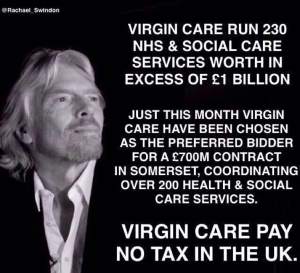
Our NHS?

Virgin Care has many, many contracts in Devon:

http://www.virgincare.co.uk/explore-our-services/

It says it “pays its taxes” but it uses at least 13 tax havens for its money:

https://www.theguardian.com/society/2015/mar/21/ow-lucrative–deals-go-to-firms-that-use-tax-havens

ec9d8a67-fb0b-4857-a1cb-23075df73dbf-608-0000004972116ca2_tmp