How neighbourhood plans died

Concluding paragraph of the article:

“The new Framework introduces a two-tier hierarchy of policies: strategic and non-strategic. Strategic policies may be contained in either a development plan or a spatial development strategy made by combined authorities and mayoral combined authorities. The National Planning Policy Guidance still states that “A neighbourhood plan attains the same legal status as the Local Plan once it has been approved at a referendum.” [15] but such plans are now in fact doomed to occupy a permanent state of permanent relegation in the second tier of this new planning policy hierarchy.”

http://localgovernmentlawyer.co.uk/index.php?option=com_content&view=article&id=36521%3Areflections-on-the-revised-nppf&catid=63&Itemid=31

Cranbrook: please return your anti-social behaviour diary – or start one!

From town council Facebook site:

“Just a request to those residents who have been keeping anti-social behaviour diaries to please return them to the Town Council office in the Younghayes Centre, 169 Younghayes Rd, EX5 7DR as soon as possible (or if preferred, by email, marked confidential, to office@cranbrooktowncouncil.gov.uk) so we have the information in time for a related meeting.

Thank you. Other residents experiencing problems are welcome to request a diary.”

“‘Lost for words’: Somerset cuts £28m of help for most vulnerable”

Owl says: had the council raised council taxes by the cost of living in each of the years they boasted about freezing it AND making cuts at the same time ALL of the shortfall would have been covered – and more. They would have raised £114m whereas current cuts required immediately are £28 million. And all to pretend to voters that they were being very, very clever when they were being very, very stupid.

East Devon District Council operated with the same “freeze, cut and boast” throughout those years too. Though interestingly, one thing they don’t seem to have cut is staffing levels …..

“Tory council latest casualty of drastic austerity measures imposed on local government:

“On Wednesday, the eight-person cabinet of Somerset county council voted through £28m of spending cuts, spread over the next two years. Over the previous six months, speculation had raged over whether Somerset would become the next Conservative-run council to join Northamptonshire in effectively going bankrupt and calling in government commissioners to sort out its mess.

And here was the answer, delivered at not much more than a week’s notice. To avoid a final disastrous plunge into the red, there would be a hacking-down of help for vulnerable families and children with special educational needs, youth services, road-gritting, flood prevention, and much more.

The proceedings took place at Shire Hall, a mock-Gothic Victorian edifice in Taunton, Somerset’s county town. An hour before they started, around 80 people had gathered to protest, chanting a slogan apparently dreamed up by the local branch of the public sector union Unison: “Don’t let the eight decide our fate.” Among the quieter participants in the protest were women who work on the county’s GetSet programme, which helps some of the county’s most vulnerable children and families. Around 70 of them are set to lose their jobs.

For fear of getting in trouble, they insisted on speaking anonymously. “There’ll be no early help,” one of them told me. “Families won’t get any attention now until they’re in crisis.”

“I’m lost for words,” said one of her colleagues. “I don’t know what to say, really. We’ve kind of been expecting this for years, but at the same time, you think, ‘Surely it won’t happen.’” They said they were expecting the finer details of the cuts’ implications to emerge in the coming days.

This is proving to be the year when the drastic austerity imposed on councils over the last eight years reaches a critical point. England’s Labour-run cities are faced with economies that stretch into the future. Back in February, Northamptonshire hit a financial wall, and issued a Section 114 notice, banning expenditure on all services outside its statutory obligations to safeguard vulnerable people. As well as Somerset, councils in Norfolk, Lancashire and East Sussex were soon said to be in danger of going the same way.

Each of these councils has its own story, but there are two common threads: they are Tory-run, and their financial problems are often ramped up by the needs of populations spread over large areas. Somerset, which covers 1,640 square miles, is a case in point and, like many English counties, its outward appearance belies its social realities.

Articles in Sunday magazines might suggest the county is now the preserve of farmers and recently-arrived hipsters. But its three largest towns are Taunton, Yeovil and Bridgwater: post-industrial, hardscrabble places which contain 19 council wards in the 20% of English areas classed as the most deprived, and whose social fabric has already been drastically damaged by austerity.

Inside the council chamber, the debate occasionally flared into anger, intensified by the fact members of the public had been given only 48 hours to read 600 pages of documents before submitting questions.

Labour and Liberal Democrat councillors repeatedly brought up the fact that between 2009 and 2016, Somerset’s ruling Conservatives had imposed a freeze on council tax, when an increase of 1.9% would have brought in an additional £114m. There were mentions of Somerset’s recent record on children’s services and the fact that in 2013, inspectors from Ofsted gave its work the lowest rating of “inadequate”, a verdict it says it has been trying to address since.

There was also talk about what was going on at the highest levels of the administration. In April, the council’s finance director departed after 31 years, and reportedly took a job at a donkey sanctuary; his temporary replacement is said to be costing the council nearly £1,000 a day.

Legally, all councils have to set an annual balanced budget. In this financial year, the meeting was told, the council was facing an overspend of £11.4m. Much of this was rooted in the rising costs of children’s services, traceable in turn to a shortage of social workers, foster carers and adopters. But there were plenty of other factors at work. In the last five years, the biggest block of money Somerset receives from central government, the so-called revenue support grant,has fallen from around £90m to less than £9m. Next year, it will disappear completely. The county’s reserves are now down to a mere £7.8m.

Ten years ago, as George Osborne commenced the era of austerity, the council’s Tory leadership gave the impression that it was only too keen to help. These days, by contrast, most of the Conservatives trying to find a way through the mess have the wearied, put-upon look of people hanging on to an ethos of public service, but involved in something so difficult that it seems almost impossible.

This theme ran through the 20 minutes I spent talking to the council’s Tory leader, David Fothergill. He said the council’s problems had affected his health, but wouldn’t be drawn on any specifics. “This isn’t why I came into politics,” he said. “We all try to make things better, but at times, it seems like we’re making things worse to try to get there.”

Up until 2009, the council was run by the Lib Dems, which also had three of Somerset’s five MPs. Now, all of the county’s parliamentary representatives are Tories, along with 35 of its 55 councillors. As much as anything, then, this is essentially a story about the Conservative party, and the widening gap between national politicians and the local councillors whom they expect to dutifully implement many of the decisions made in Westminster and Whitehall. By way of making these tensions clear, one Somerset MP this week accused the council of being “an object lesson in waste”.

“Three or four weeks ago,” Fothergill said, “I wrote to all of the Somerset MPs, telling them what was coming. Very little has come back. Four or five days ago, I wrote saying, ‘I really need some help – we’re getting to the sticky end of this.’ And I got nothing back: no response.

“I know we’re all busy, but actually, the most important people in all this are people who live in Somerset. And I will stand up for them, and make myself very unpopular, because my job is to look after them.”

Not long after we spoke, an emailed statement from the department for housing, communities and local government arrived: “Our funding settlement gave a real terms increase in resources for local government in 2018-19. Local authorities are responsible for their own funding decisions, but over the next two years, we are providing councils with £90.7 billion to help them meet the needs of their residents. We are giving them the power to retain the growth in business rates income and are working with local government to develop a funding system for the future based on the needs of different areas.”

As Fothergill led six hours of discussion in the council chamber, his voice occasionally cracked with emotion. Early on, he announced that a £240,000 cut in help for young carers, which had prompted no end of outrage, would be deferred and reviewed. But everything else passed, and there was frequent talk of more cuts to come.

In the Shire Hall’s cavernous reception area, I spoke to Leigh Redman, one of Somerset’s three Labour councillors. “The leader of the council needs to stand up and start pointing the finger,” he said. “He should stand up and say to the government: ‘We’re bankrupt. You’ve put us in this position – now get us out of it.’”

Was he talking about setting an illegal budget, and thereby triggering the arrival of government commissioners?

“If needs be,” he said. He then paused. “I’m waxing lyrical,” he told me. He then turned and went back up the stairs to the council chamber. There were three hours and several millions pounds of cuts still to go.”

https://www.theguardian.com/business/2018/sep/14/lost-for-words-somerset-cuts-28m-of-help-for-most-vulnerable

“Six PCCs [Police and Crime Commissioners] are good, 22 are hopeless”

“Elected police and crime commissioners are described as “bleeding hopeless”, “not that bright”, abusive and politically driven in a report that exposes the crisis at the top of policing.

Retired chief constables claim that they were forced to do “dreadful things” by PCCs looking for votes, while senior officers say that they have been put off going for the top jobs because there is a risk of being “thrown under a bus for political expediency”.

The report on police leadership, commissioned by the National Police Chiefs Council (NPCC), reveals that applications for chief constable vacancies in the 43 forces in England and Wales are at the lowest level on record, while tenure in the post has fallen to an average of less than four years.

The report, seen by The Times, points to a range of factors including the troubled relationship between some chief constables and PCCs, who replaced police authorities when they were introduced in 2012 by Theresa May, when she was home secretary. They have the power to hire and fire chief constables and set budgets.

PCCs’ ability to “seemingly arbitrarily” sack police chiefs is cited as a factor in the lack of applications for the top posts. Senior officers are also reluctant to apply for jobs outside their force area because of a perceived chumminess between incumbent deputies and their PCC. One officer claimed that the system was being “fiddled”. More than half of chief constables appointed in 2015 were the only candidate for the job.

Sara Thornton, chairwoman of the NPCC, ‘said that the report “is a warning to us that we need to deal with these problems”. She added that the majority of PCCs and chief constables worked well together and that both parties wanted to resolve the leadership issues and had the same goal of getting the best people into the top jobs. Chief constables and PCCs will hold a discussion on the issues next month.

‘Six PCCs are good, 22 are hopeless’

The comments by anonymous chief constables were negative enough but it was the assessment from within the ranks of police and crime commissioners that landed a killer blow.

Speaking about their colleagues in 2015, one anonymous PCC told researchers: “You must not assume that being eccentric and having lousy judgment are prerequisites for the job, even though some of my PCC colleagues exhibit these characteristics in spades. There are six or seven really good PCCs… and about 22 who are absolutely bleeding hopeless.”

The damning quote was contained in the report commissioned by the National Police Chiefs Council (NPCC) to highlight concerns about the “vulnerabilities” of the elected PCC system and the absence of checks on their behaviour.

The superintendent who compiled the report — with input from 13 retired chiefs, one incumbent chief, and 70 assistant chief constables and deputy chief constables — said that in most cases chiefs worked effectively with PCCs. However, retired chiefs said it was a matter of luck depending on the PCC they got and that some were “difficult, unhelpful and unprofessional”. One said: “Why would any sane person place their operational independence and financial security at the whim of a politician? I have worked too long to place my personal reputation on the line, to place it at risk of being thrown under a bus for political expediency.” Another claimed that “power and ego” went to the PCC’s head.

The report highlighted an “unprecedented” average period of chief constable tenure of under four years, a higher turnover of female chief constables compared with their male counterparts since the introduction of PCCs, and low numbers of applications for the top job.

The report highlighted other significant problems including heavy handed investigations of chiefs by the Independent Police Complaints Commission. Retired chiefs reported feeling beleaguered, under pressure, undervalued and “subject to no leadership from the Home Office”.

The report’s findings will be considered next month at a roundtable of chief constables, PCCs and other interested parties such as the College of Policing, the standards body.

Sara Thornton, the NPCC chairwoman, said that there were clearly retired chief constables who had been “damaged” by their experiences and she wanted to prevent that happening again.

Small changes such as encouraging mediation when a relationship between chief and PCC broke down, and requiring PCCs to put their reasons for suspending a chief into writing, could help to fix the problems. Mark Burns-Williamson, chairman of the Association of Police and Crime Commissioners, said that the NPCC report was based on research with a small sample size that had “no formal status”. He said he did not agree with the negative descriptions of PCCs.

Behind the story

Police and crime commissioners were introduced in 2012 to scrutinise chief constables, replacing police authorities.

David Cameron, prime minister at the time, was impressed by the US system of vesting broad police oversight powers in a single elected figure. So it is not surprising that the relationship between chief constables and PCCs can be a testing one.

The leadership report underlines entrenched problems that are unlikely to be resolved without significant changes to the system.

One chief constable said yesterday: “A number of people have left because their positions have been made intolerable.” While PCCs have the power to hire and fire chief constables, and set budgets, they are not supposed to encroach on operational policing.

However, it is widely accepted that some have, and that some chief constables have let them. There is also a perception among chief constables that they can be discarded by PCCs without proper checks and balances.”

“Elected police chiefs [Police and Crime Commissioners] are eccentric, not that bright or bleeding hopless say officers”

Owl says: the trenchant article suggests reform of the PCC role – but oversight by committee (the former arrangement), although it had its flaws, worked better. What the article does not say is that inadequate PCCs fall back on anonymous paid staff (such as their next-in-command highly paid Career CEOs)to do their work for them, then falling happily themselves into a mostly ceremonial role while trousering the substantial salaries.

“The post of police and crime commissioner is six years old and wearing its age poorly. As few as one in ten voters can name their commissioners. An innovation that was supposed to revive local democracy and strengthen police accountability has not achieved either goal. Instead, too often, commissioners have repaid low turnout at the polls with low-calibre performances in office.

Commissioners set the strategic priorities of every police force outside London and are subject to little real oversight. They can hire and fire chief constables without so much as writing down their reasons. This may have more to do with politics and personalities than the public good.

A report commissioned by the National Police Chiefs’ Council now adds to the perception of commissioners as a failing experiment in two ways. It quotes senior sources describing most of the country’s commissioners as variously “eccentric”, “not that bright” and “bleeding hopeless”; and it blames them in part for a serious shortfall in applicants for chief constables’ jobs.

Admittedly the author of this report, a serving police superintendent, may not be wholly impartial. Nor should anyone be surprised to see tensions in the relationship between senior police officers and those elected to supervise their work. The document is significant nonetheless. To perform the role envisaged for them commissioners need the trust of the public and also of police. In many forces they plainly do not have it.

The idea of vesting broad police oversight powers in a single elected figure was inspired by compelling stories from both sides of the Atlantic. Rudy Giuliani, as mayor of New York, promised and delivered zero tolerance on crime. Ray Mallon achieved a similar transformation as elected mayor of Middlesbrough. David Cameron and Theresa May took up the theme in the early years of the coalition, hoping to replace unelected Police Authorities with dynamic public figures.

Disappointment set in early. Turnout for the first elections of commissioners in 2012 was a miserable 15 per cent. Most candidates were white and male. One who was not, Ann Barnes in Kent, undermined the credibility of the scheme with a disastrous TV interview in which she was unable to explain her role. Shaun Wright, in South Yorkshire, clung on to the job even when his failure to act in the Rotherham child sex grooming scandal became clear. Others have misused taxpayers’ money, removed chief constables without sufficient explanation and replaced them without casting their nets wide enough. Where commissioners have proved too easily cowed by senior officers the results are no less damaging. At least one chief constable who should have been censured for egregious misjudgments in an investigation was allowed instead to move smoothly up the career ladder.

One successful commissioner, former Air Chief Marshal Sir Clive Loader, said towards the end of his four-year term that he would not seek re-election because he saw the job as akin to “a last tour of duty”. The remark points to a fundamental problem. Commissioners will never gain public confidence if they are regarded as time-servers at the end of their careers.

The 2013 Stevens report on policing recommended abolishing commissioners, but its proposed replacement was too complex and costly. Local democratic police oversight is as vital as ever. Elected commissioners can provide it, but a new balance of power is needed between the public and police. This can be achieved by giving voters the option of recall elections to remove commissioners who are manifestly failing; and by requiring commissioners to follow a clear written process when exercising their power to fire a chief constable. When that power is misused it should be the commissioner who pays, not the public.”

Source: The Times (pay wall)

“Bombshell No Deal Brexit documents show councils fear billions in lost funding and soaring poverty”

Remember, EDDC has confirmed it has done NO Brexit planning:

https://eastdevonwatch.org/2018/09/06/eddc-has-done-no-brexit-planning/

“Councils have compiled a dossier of No Deal Brexit documents which warn that thousands could be left destitute in communities across the country.

Local authorities fear they may be left “unable to effectively support local communities” but they warn that the Government is failing to heed the warnings.

They say that a post Brexit downturn could see businesses up and down the country go bust.

While a series of major investment proposals have been put on hold due to Brexit.

A number of councils suggested Brexit will make desperately needed regeneration projects “unviable”.

Strikingly some of the most stark warnings come from areas which voted to Leave.

Fenland District Council rank the risk associated with a no deal Brexit on the same level as that of a natural disaster.

The area in the East of England depends on unskilled labour from Eastern Europe and 70% of people living there voted to Leave.

It produced a corporate risk register in June which gave the risk of failing to take action to prepare for Brexit a score of 25/25.

That rating is reserved for items with the potential for “catastrophic impact” and equal to the threat posed by a natural disaster.

Hackney Council raised concerns over the impact of Brexit on local job growth, with one local business claiming Brexit had “traumatised our office and the sector we cover”.

Hackney also echoed other local councils in reporting a spike in hate crimes since the 2016 referendum.

Harrow Council in London also predicted an increases in levels of poverty, homelessness and health inequalities in the Borough.

Lancashire County Council highlighted the importance of EU trade, with 62% of Lancashire’s exports (£1,876 million per year) destined for the EU market.

Around 300 councils replied to the Freedom of Information requests which were put in by campaigning group Best for Britain- making the project one of the largest bodies of research into Brexit planning undertaken so far.

Commenting on the findings, Best for Britain champion Layla Moran MP said: “These internal council documents are devastating. They show Brexit will cause tremendous damage to their ability to provide the quality public services towns and cities up and down the country so desperately need.

“The only thing scarier than these documents is the fact that some councils haven’t done them – effectively they’re walking off a cliff blindfolded.

“The finger should point directly at those extremist Brexiteers in the Tory party with a gun to the country’s head. We cannot let this sinister gang of hucksters usurp common decency and sensible politics.

“Thankfully, the fight isn’t over. We can still put a stop to this madness through a people’s vote with the option to stay in the EU. Only then will the people of this country be able to compare the devastation of Brexit – as shown in these documents – with the bespoke deal we’ve been building up over the past four decades.”

https://www.mirror.co.uk/news/politics/bombshell-no-deal-brexit-documents-13238369

“Ireland sets up land agency as anger grows at housing shortage”

“… Despite being left with a surplus of houses after a 2008 property crash cut values in half, Ireland has been falling far short of the 35,000 new builds analysts say are needed annually just to keep up with demand from an economy and population growing faster than any other in the European Union.

Modelled on similar bodies in Germany and the Netherlands, the Land Development Agency (LDA) will be tasked with opening up land owned by local authorities, state departments, semi state bodies or in some cases the private sector to build 150,000 new homes over the next 20 years.

“We are acknowledging the reality that some of the sites that are causing this issue are in the ownership of public bodies,” Finance Minister Paschal Donohoe told a news conference.

“The adoption of a more pro-active land management role by the state is critical to solving the current housing crisis and creating downward pressure on land prices.”

Land for 3,000 units has already been secured from state bodies by the LDA, the government said, including, for example, by moving the country’s central mental health facility out of a Dublin suburb more suited to the construction of houses.

“Ireland has a poor history of managing its land in a sustainable way. This has resulted in inefficient use, sprawl and volatile price cycles,” Dermot O’Leary, chief economist at Goodbody Stockbrokers wrote in a note.

“While the impact from such an agency will not be felt immediately, it will be a welcome addition to the housing policy toolkit to aid in preventing some of the mistakes of the past.”

https://uk.reuters.com/article/uk-ireland-housing/ireland-sets-up-land-agency-as-anger-grows-at-housing-shortage-idUKKCN1LT2GM

“Ombudsman offers practical guidance to planners when recording decisions”

It then neglects to post a link to the guidance on its website ….. anywhere ….. including using the search facility …..

“The Local Government and Social Care Ombudsman has issued new guidance for planners when recording the decisions they make.

The Ombudsman receives more than 2,000 complaints and enquiries each year about English local authorities’ planning functions.

Common areas in which the Ombudsman finds fault with the decision-making process include failing to explain properly the reasons for decisions, or overlooking material considerations.

Based on real casework examples, the learning points in the report offer clear, practical steps planners can take to ensure the decisions they make are evidenced and recorded properly.

Local Government and Social Care Ombudsman, Michael King, said:

“Communities can only have confidence in the planning process if councils fully and accurately record the reasons for their decisions, including the information they have taken into account to make them.

“We have created this new guidance to share the learning from our investigations with professionals about this aspect of the planning process, and to help councils improve their procedures, and services for the public, to ensure the decisions they make are as transparent as possible.”

The guidance also includes a number of good practice suggestions, along with links to relevant legislation and resources, including the framework Ombudsman investigators use to publish their own investigation decisions.”

https://www.lgo.org.uk/information-centre/news/2018/sep/ombudsman-offers-practical-guidance-to-planners-when-recording-decisions

Otterton residents worried about holiday park expansion take note

“Plans to expand a holiday park near Ashford have been refused by North Devon councillors.

Park Holidays UK’s plan to accommodate as many as 116 caravans and build a clubhouse complete with a swimming pool, amusement arcade, shop and entertainment room at Tarka Holiday Park was discussed by North Devon Council’s planning committee on Wednesday.

Councillors unanimously refused the application, which would have included a new roundabout to serve the entrance at Braunton Road, and the decision was met by a round of applause from a group of around 30 Ashford residents who attended the meeting at Barnstaple Rugby Club.

They cited an adverse impact on the landscape and countryside, the scale of development and the impact on the village of Ashford and other amenities as reasons for refusal.

Councillor Joe Tucker said: “I’ve had quite big concerns about this site in many ways, and we have got grave concerns as a planning committee with the site.

“We are driven so much by national planning policy guidelines made by people sitting in London, it’s a different kettle of fish for people in North Devon.

There are so many fundamental issues with this site. I think it’s dangerous for us as a planning committee to pass through an application with so many issues.”

The committee heard from six village residents, who expressed concerns about the level of noise, the generation of traffic and the impact on a nearby supported living accommodation.

Parish Councillor John Bleech said it was ‘hard to overstate’ the level opposition to the application, noting 138 letters of objection sent to the council.

Ashford resident Dale Hall said: “Ashford strongly objects to the application and all residents fear for their life in the village. The development is too large, too commercial and too close.

“The change from a quiet caravan site into a large entertainment complex should bring noise.

“Tarka say this is a tranquil site but they threaten that tranquility with that application. Ashford will feel betrayed by the local authority if the application is approved.”

The Gazette has approached Park Holidays UK for a response.

A statement from Park Holidays UK said: “Park Holidays UK will be studying the reasons for the council’s decision with a view to determining the best course of action which will enable us to take the matter forward.”

https://www.northdevongazette.co.uk/news/tarka-holiday-park-expansion-1-5694176

“Business council ‘worried’ European grant won’t be spent”

Thought our Local Enterprise Partnership had this all under control …..

“The people in charge of giving out European grants across the South West have not yet managed to find takers for around £330m worth of available funding.

In the past, European grant schemes have funded major improvements across the region.

It’s thought the prospect of Brexit is leading potential grant applicants to assume there’s no longer any point in coming forward.

There’s a risk that unless suitable grant applicants can be found soon, some of the money will be sent to other parts of Britain or even go back to Brussels.

Robin Daniels from the South West Business Council is worried a significant proportion of the money won’t be spent in the region…

https://www.bbc.co.uk/news/live/uk-england-devon-45445757

“Home builders’ lobbyist pushed council leader to ‘sort’ and speed planning”

Is this any different to having a (Tory) COUNCILLOR in charge of planning running his own planning consultancy AND chairing an influential business forum? And if this expose came about from a Freedom of I formation request about events in Wandsworth in 2011 and 2013 …..

https://www.telegraph.co.uk/news/politics/9920971/If-I-cant-get-planning-nobody-will-says-Devon-councillor-and-planning-consultant.html

“A lobbyist for some of the UK’s biggest property developers used a direct communication channel to the leader of a flagship Conservative council to help push through planning applications for luxury apartment developments.

Peter Bingle used his longstanding relationship with Ravi Govindia, the leader of the London borough of Wandsworth, in attempts to circumvent council officials he believed were being obstructive to his clients, including over the size of payments due to public projects.

Bingle’s access has been revealed in a cache of emails released under the Freedom of Information Act that show him asking Govindia, a former flatmate, to smooth the passage of planning applications for hundreds of luxury homes between 2011 and 2013. Govindia responded in some cases by promising to chase officials and fix meetings.

Berkeley calls affordable housing targets ‘unviable’ as chairman earns £174m

Bingle is a former Conservative councillor at Wandsworth and was chairman of Bell Pottinger Public Affairs, once one of the country’s biggest lobbying firms. He set up Terrapin Communications, whose clients have included Ballymore and Bellway, the housebuilders, and Royal Mail when it was selling off its land for housing.

When Royal Mail complained about the junior rank of the planning officer assigned to its application and having to repeat details of its plans to officials, Bingle emailed Govindia: “This wouldn’t have happened under the old regime. Your help would be appreciated in sorting things out.”

Bingle later forwarded the Royal Mail’s plan for its presentation to the Wandsworth planning committee to Govindia asking “What’s your advice?” Govindia replied two minutes later: “Will call as soon as I finish this meeting”.

Nearly 100 London councillors have links to property industry

There is no suggestion of wrongdoing, but the correspondence provides a rare window on the methods developers use to apply pressure to politicians behind the scenes to speed up high-stakes planning decisions and to reduce infrastructure payments. An investigation last week revealed how Berkeley Homes, one of London’s largest developers of luxury homes, routinely told local authorities that their affordable housing targets were unviable.

In April, the Guardian revealed planning lobbyists regularly entertained Robert Davis, Westminster city council’s former planning committee chairman. Davis received hospitality or gifts 893 times over six years, frequently from developers and their agents, including Bingle. He has since resigned as deputy leader.

The emails relate to when Bingle was working as a lobbyist for the Royal Mail, which had submitted plans for a 1,800-home development on its site close to Battersea Power Station. In one email to Govindia he lambasted the council’s handling of a negotiation about how much his client should pay to the public purse as “chaotic and shambolic”. He told Govindia it “does nothing for Wandsworth’s reputation in the property world … Something has gone seriously wrong.”

The planning application was eventually approved. Royal Mail last year sold part of the site to US investors for £101m.

Bingle chased Govindia for updates on progress of another 252-home application at Battersea for another client, complaining about “non-committal” planning officials. He applauded the leader when a separate application for 104 private flats in Putney by Berkeley Homes was approved, signing off an email: “Many thanks for a great result.” It had no social housing.

Bingle has denied exerting any undue influence and Govindia said he made no apology for delivering more homes for Wandsworth.

Public records show Bingle has entertained at least 31 councillors in different London boroughs in recent years, taking some out for lunch or dinner more than a dozen times. When Govindia, who was among those he entertained, was awarded a CBE in 2017 Bingle said: “Never has an award for services to local government been more deserved.”

Govindia did not sit on Wandsworth’s planning committee, but Bingle repeatedly urged him to help, often simply forwarding on complaints from property developers.

In January 2012, Royal Mail was concerned about what the council wanted in terms of payments for schools and education. Bingle forwarded an email about that directly to Govindia saying “Ravi, Views?”

Govindia replied later that day: “I will chase the education chaps”.

By March, the development consultant on the scheme asked Bingle to “prod Ravi that we need to get on with this”. Bingle forwarded the email to Govinidia saying “I thought it simplest just to forward this to you”.

When Bingle sent an email asking: “Leader, Can we get a meeting with you in the diary for next week? This scheme is now stuck,” Govinida replied: “I have asked for an update from planners next week.”

Asked about the relationship Bingle said: “The fact that this information came from a freedom of information request shows that it was always available for scrutiny in the public domain. And rightly so. Having been a long-standing friend of Ravi I know it is impossible for anybody to have undue influence over him. Since his earliest days on Wandsworth as a backbench councillor he has always resolutely defended his own viewpoint even if it meant voting against the Conservative group.”

Govinidia said: “It is first and foremost the job of any council leader to press those on all sides to deliver improvements to their borough and improve the lives of their residents. To do the job effectively you need to listen to all voices and make sure that when problems or snags arise that you are on top of them and that you can secure solutions to drive forward and deliver these improvements. I make no apology whatsoever for fulfilling my role as a council leader to deliver more homes, more jobs and more opportunities for our residents.”

He said the Royal Mail development will deliver 318 new affordable homes, a higher number than the developers were originally offering.”

https://www.theguardian.com/uk-news/2018/sep/13/home-builders-lobbyist-pushed-council-leader-to-sort-and-speed-planning

“Councils in England spend £4bn on 220,000 redundancies since 2010 (and Tory Somerset County Council Leader blames Tories”

“English councils have spent almost £4bn making over 220,000 staff redundant since 2010, according to research which highlights the impact of austerity cuts on local government funding.

The north-west of England has seen the largest number of municipal jobs lost – over 41,190, followed by London (34,804), and the West Midlands (33,904), according to data obtained by the Local Government Chronicle (LGC).

Birmingham city council, the UK’s largest local authority, made by far the highest number of redundancies over the period – 8,769 – halving its workforce. As a consequence it spent the most on compensation packages (£184.8m). …

Many councils are preparing for a fresh round of cuts in a bid to stave off insolvency. Somerset county council yesterday announced it would make up to 130 staff redundant and make big cuts to children’s social care services as part of a two-year programme aimed at saving £28m.

The council, which was warned in May that its deteriorating finances put it at risk of going bust, said it was shifting to what it called a “core service offer”, meaning that it would look to deliver only those services it was legally obliged to provide.

David Fothergill, Somerset’s Tory leader, blamed the council’s position on a “broken” system of local government funding. The council had made £130m of savings over the past eight years. English councils have experienced government grant funding cut by around half since 2010.”

https://www.theguardian.com/society/2018/sep/13/councils-in-england-spend-4bn-on-220000-redundancies-since-2010

Manchester regeneration makes inequality worse

“Glitzy high-rise developments have been on the march in Manchester for the past 30 years but they have left poorer families out in the cold, according to a damning report.

Predictions have been made that Manchester is facing a looming housing crisis due to a “misguided” developer-led regeneration strategy.

Almost 50,000 new and mostly private homes are planned in central Manchester by 2040 – yet some 80,000 people are currently on Greater Manchester’s social housing waiting list.

The report from Alliance Manchester Business School said regeneration over the past 30 years has focused disproportionately on new flats and offices in the two central boroughs of Manchester and Salford. It said this has resulted in a centre filled with one and two-bed buy-to-let flats built for one demographic – young white-collar workers – and is failing to meet the demands of others such as families and those on lower incomes.

The report also argued that there is a danger of the creation of “social clearances” where expensive new developments could create community tensions. As central Manchester expands, the planned developments in areas such as Angel Meadow and Collyhurst could intrude on existing communities, many of them in areas of social deprivation.

Over the past 30 years, according to the reports’ authors, local authorities have allowed private property developers to lead the city’s regeneration, focusing primarily on building new flats and offices in central Manchester and Salford. The repercussion of this, they said, is that the city is no longer meeting the needs of many of its residents and does not have the social infrastructure such as schools, libraries and broadband “that communities need to thrive”. …”

https://www.theguardian.com/uk-news/2018/sep/13/manchesters-building-boom-has-left-poorer-families-out-in-the-cold

“Cash Machines Closing At A Rate Of More Than 250 A Month”

Rural areas and small businesses hit hardest:

“…A total of 76 protected ATMs – those which are located one kilometre or more away from one another – were lost in the period.

Of those, 43 had Post Office over-the-counter services available nearby while 12 could not be accessed by the public. Some 21 machines were shut down with no alternative access to cash.

The Federation of Small Businesses expressed concerns that the closures could hit small business owners in remote areas. …”

https://www.huffingtonpost.co.uk/entry/atm-closures_uk_5b993a88e4b0162f473313f0

Archbishop of Canterbury accuses big firms of ripping off the poor

When the top Anglican gets involved, you know things are bad!

https://www.theguardian.com/uk-news/2018/sep/12/justin-welby-universal-credit-rollout-halted-food-banks

“Furious couple put ‘s**thole’ new build house up for sale on Facebook – for £50,000 less than the asking price”

Wain Homes

South Molton
https://www.devonlive.com/news/devon-news/south-molton-facebook-new-build-1995289

and worth looking on Trustpilot:
https://uk.trustpilot.com/review/www.wainhomes.net

Benefits help Claire Wright style!

Compare and contrast the way EDDC (previous post) and Claire Wright approach people with benefits problems. And the way Hugo Swire and Neil Parish do – nothing.

“Two officers from the Citizens Advice Bureau were able to help the majority of people with their challenges at the benefits drop-in meeting I held last month, at the Institute in Ottery St Mary.

Hilary Nelson, chief executive of East Devon Citizen’s Advice Bureau was on hand to support people, with her colleague, Sheran at the meeting, which took place on Tuesday 21 August.

Around a dozen people attended and listened to each other’s stories, which centred around difficulties with claiming a range of benefits, resulting in a great deal of stress.

Residents came from the Ottery area and beyond. Difficulties reported included with working tax credit overpayments and the impact of being financially penalised so as to be unable to pay bills and rent. Others reported being told they were fit to work, even though a doctor had submitted a report to state otherwise. Others wanted more information about the carers allowance.

Also at the meeting was student, Molly Dack, who is working with a benefits advocacy project to provide free legal advice free in Bristol. Molly is interested in supporting East Devon Citizen’s Advice Bureau in providing a similar project in Devon.

This sounded like a brilliant idea and received a warm welcome from Hilary Nelson. We had a discussion after the meeting and I advised on sources of funding that might help with setting up such a valuable service.

All the residents who came along were offered appointments with CAB officers, who said they would work to try and obtain the benefits they are entitled to, or assist with the appeals process.
Citizens Advice Bureau officers sit with clients, listen to their stories and represent them with government bodies. It is an invaluable service, more needed now than ever before, due to massive funding cuts by government.

Having represented local people on these issues, I can testify what a massively complicated bureaucratic system is in place. And because of austerity budget cuts there does not appear to enough staff in the call centre to cope with the level of demand.

Many of the problems reported at the meeting also related to process being inefficient and poor, such as a complaints manager not diverting her phone while on holiday, and people having to submit their details many times, or staff being irritable or repeatedly getting the information wrong.

Some cases had been going on for months without resolution. It’s exhausting, dispiriting and stressful when this happens. Even I found it stressful when I couldn’t get through for hour after hour and it wasn’t me who couldn’t pay my rent or bills!
Ms Nelson then updated everyone on the introduction of Universal Credit, which came into force in East Devon in July for new claimants. It merges six benefits into one and has resulted in a cut in Working Tax Credit. It has received a lot of very negative national press coverage, with the National Audit Office (NAO) essentially condemning it.

A report published by the NAO in June stated: “We think the larger claims for universal credit, such as boosted employment, are unlikely to be demonstrable at any point in future. Nor for that matter will value for money.”

The NAO report painted a damning picture of a system that despite more than £1bn in investment, eight years in development and a much hyped digital-only approach to transforming welfare, is still in many respects unwieldy, inefficient and reliant on basic, manual processes.

The very controversial six week delay for the first payment can now be resolved by claimants asking for an advance. Although this is treated as a loan and must be paid back.

Since the meeting’s publicity in the local press, I have been contacted by Lee Tozer, Devon and Cornwall Area Manager for Job Centre Plus.

He has been very helpful and I have since met with him and talked through some of the key issues. I also visited Honiton’s Job Centre (the only centre left in East Devon now as every other office has been closed due to austerity cuts) where I was greeted by its manager, Sadie Steadman. I chatted to her and with her staff about their roles and how they are trying to get more people back into work, as per the government’s directive.

I also spoke with an East Devon District Council officer, who is stationed at Honiton Job Centre five days a week to help claimants with housing benefit and Universal Credit issues.

I found the staff to be enthusiastic and compassionate. I sat in on an interview with someone who was as keen as mustard to get a job and was over the moon to have been offered one. That was nice.

I very definitely have reservations about the sanctions process. There is a difference between someone playing the system and not bothering to turn up for appointments and someone who genuinely is having problems or genuinely cannot work or arrive for an appointment, although staff assured me that they made every effort to contact someone before sanctioning them.

But there is bound to be a gap here in some cases, between the views of people who don’t believe they are fit for work (such as those people with a terminal illness or with cancer) and assessors who have assessed them as fit for work. From talking to the local staff they seemed to be running a tight and fair ship. However, the stuff coming out of the national press on the suffering caused by benefit sanctions is truly appalling.

As well as the fantastic support from the Citizen’s Advice Bureau, Job Centre Plus also provides a dedicated helpline for people who are having difficulties.

Please contact me direct if you need access to this number. Otherwise you can contact Job Centre direct or simply drop by. No prior appointment needed.
I will keep a close eye on this issue….”

http://www.claire-wright.org/index.php/post/citizens_advice_bureau_officers_assisted_majority_of_people_who_came_to_my

Tory EDDC council tries to salvage Tory government benefits policy!

Unbelievable – a Tory council having to offer help people struggling with a Tory government benefit cock-up. Perhaps councillors should ask how many residents have sought such help!

None of this should be necessary.

EDDC PRESS RELEASE:

“Universal Credit claimants struggling to cope with recent changes urged to seek help from council’s benefits team

‘We’re here to help’

East Devon District Council is urging working age residents who are struggling to cope with the recent changes to Universal Credit to seek help and get in contact with its benefits team.

Over the last few months, the team has been advising and supporting over 70 working age residents to make their Universal Credit claim, working alongside Honiton Jobcentre Plus staff with the roll out of the new benefit.

In many cases, team members have gone the extra mile to help those who have come forward. In one example, they helped a young man who had recently moved to Honiton into temporary accommodation. He had a small child and was distressed because he was having difficulties claiming benefits. An officer sat with him and helped him with his claim where, he discovered, he had more benefits available to him than he thought. Officers also contacted his support worker who will now help him with future claims.

In another case, a young claimant attended the Honiton office to make a claim online too late in the day to get payments sorted. Although she left with details of the foodbank nearby and an appointment as early as could be arranged, she was very distressed and in tears. Immediately the following morning the officer who helped the claimant organised help for her.

Cllr Dean Barrow, East Devon District Council’s portfolio holder for finance, said: “Our message is clear – please get in touch with us and we can help you. Many of our customers applying for Universal Credit are finding that our help is invaluable and the council genuinely wants to support our residents affected by this change and help them receive the benefit that they need.

“If anyone is experiencing any problems with claiming Universal Credit or have any concerns about it, please get in touch with the district council’s Benefits Team.”

If you are making a claim for Universal Credit don’t delay in making your claim and getting information to support your claim sent to the Jobcentre. If you need any help to make your claim or you are struggling with this, please get in touch with the district council’s benefits team by email benefits@eastdevon.gov.uk or by phone 01395 571770 or contact Jobcentre Plus on 0800 328 5644.

To find out more about Universal Credit visit our website: eastdevon.gov.uk/benefits-and-support/universal-credit/claiming-universal-credit/

Failing academies cannot return to local authority control

Not only can failing academies not be returned to local authority control, they also retain control of the land that the failing schools occupy …. aaah, Owl begins to see a loophole here …

“… parents are asking why, when a school is failed by multi-academy trusts, can it not go back to local authority supervision? Just as with other botched privatisations, schools should have the opportunity to go back to the public sector. This leads us to the biggest part of the scandal – currently there is no mechanism to allow academies to go back to being community schools under the supervision of local authorities. Academisation is irreversible.

One school in Sussex pushed the education secretary, Damian Hinds, for an answer. The Department for Education didn’t give an inch – apparently the government is not considering returning any academies to local authority control because academisation has been a huge success with more children getting a good education as a consequence. …”

https://www.theguardian.com/commentisfree/2018/sep/11/academies-parents-tories-labour

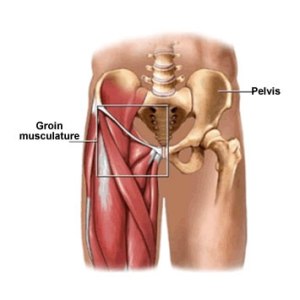
“Council report included ‘the wrong kind of groin’ for Sidmouth seafront”

Officers could not pick up the difference between “groin” and “groyne” on their spell-checkers!

https://www.devonlive.com/news/devon-news/council-report-included-the-wrong-1987900