
Source: Private Eye

Source: Private Eye
Not sure which district council this is (Teignbridge, Torridge?) but one developer appears to believe s/he runs the district and possibly even the county. As the blogger (Andrew Lainton – Decisions, Decisions blog) says, the alleged author may well regret his or her early morning post!
The wild (south) west of planning!
“Dear colleagues,
It has been good to see so many of you this month at our Group Party conferences and at the National Conference of Children and Adult Services. We also ran the first module of the Next Generation leadership course. All this adds skills and knowledge to the many talents of our [Independent] members and enables us to discuss issues and craft better solutions. The regional meetings also start shortly in every area, so we shall soon be at a place nearer you to hear your views first hand. Thank you to those who made it to the recent information and development seminar on campaigning, either in person or online in the webinar.
English councils have taken a reduction of £16m in Government Grant funding from income tax, only partly offset by the 50 per cent retention of local business rates. 166 councils will be expected to pay the Government instead, further centralising money and power, exactly contrary to the agreed direction. The LGA is working hard on this in their Budget submission. 97 per cent of councils signed up to the four year agreement, but on the promise that 100 per cent of the business rates would be retained in local government, now a broken promise. If you are one of the 166 councils, have you passed a motion to seek a better deal? Please let us know.
It leaves us short of funds to run services and makes it hard to support more people with increased housing. We have called long and hard for powers and funds to build the houses people can afford. It is bizarre that councils can borrow to build a swimming pool or a hotel, but not for much needed housing, regardless of a sound business case.
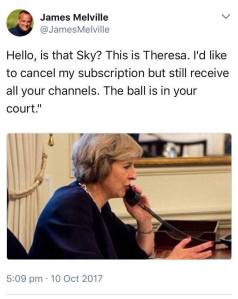
Instead of lifting this cap, Theresa May has announced a £2bn fund for social and/or “affordable” housing. If you rely on the media it is unclear whether this is intended for affordable or social housing. For example, the Sky News headline refers to affordable housing while the Guardian headline refers to social housing. Whichever it is for, it is only available to some councils and then only through a bidding process, ratheru than just giving us the funds. Her calculation of 5,000 homes a year, is based on an £80,000 subsidy per dwelling, but in areas of greatest demand, where she says she wants to direct the funding, that will fall woefully short. In its budget submission, the Chartered Institute of Housing recommended an extra £1.5bn every year to build 28,000 homes.
Sadly, although genuine funds are always welcome, the fund announced by the PM will not tackle the problem. We cannot plug the housing gap while the “right to buy” continues to drain our resources. In many councils, these have almost doubled this year, each sale taking two thirds of the value out of the public purse and into central government and private hands. We have to start to limit these expensive donations to what we can afford.
We cannot flood the market to bring house prices down while demand is unrestricted. Anyone in the world can buy here, and they do. Like a foreign holiday home, the first sale brings money into the community, but after that sales are often passed from one absent owner to another and sometimes left empty – more a place to house funds, rather than people.
We cannot make housing affordable while rents spiral without restraint and “affordable” is not linked to income, but to 80 per cent of commercial value. Many people will obviously continue to struggle. A housing rent statement is expected to confirm the move back to a maximum of 1 per cent above the consumer price index.
Meanwhile, homelessness is rising. I visited EMMAUS which provides an en suite room, regular meals, a community and a job for 720 homeless people. But it uses Housing Benefit that is about to be swallowed up in Universal Credit, an issue colleagues and I have raised at all levels. Our Vice President, Lord Victor Adebowale, CE of Turning Point was on Twitter this week supporting the work of community enterprise.
Greg Clarke, one the most thoughtful of our Ministers, responded brilliantly to my question recently, pointing out that growth could be an empty target if it did not provide balanced communities with work and housing to match.
However, DCLG has a consultation out now about increasing the pressure on councils to give permissions for housing, regardless of local ability to provide jobs, services, infrastructure such as roads and schools, and regardless of land availability without damage to the environment. Our Group’s Deputy Chairman, Rachel Eburne, is on the LGA board for the Environment, Economy, Housing and Transport. She pointed out that the cross party board was unanimous in its objection to the centralised steamroller approach.
The LGA has sought powers to prevent land-banking that prevents houses being built, while councils are required to compensate by giving ever more permissions, making a mockery of a planning system which is prevented from planning ahead. DCLG has not chosen to put any pressure on the developers to get on with it, despite our calls to give councils the ability to step in. Also the viability studies remain obscure and enable developers to reject the much-needed contributions to affordable housing or infrastructure. We cannot just look at housing on its own. It must be linked to economics, environment, and sustainability.
Leader of the Independent Group
Vice Chair of the Local Government Association
Lincolnshire County Councillor and North Kesteven District Councillor”
These people are not feckless, work-shy or scroungers – they are trying hard to make ends meet:
“Low-income tenants are now spending an average of 28% of their wages on rent, up from 21% in the mid-1990s, new research indicates. They have been hit by substantial cuts to housing benefit, with government support expected to fall “further and further behind” the cost of housing, says the Institute for Fiscal Studies.
Over the same period of time, the proportion of people renting homes privately has increased from 8% to 19%. Average private rents have gone up 33%.
“Renters are paying considerably more for their homes than 20 years ago,” says the IFS analysis, funded by the Joseph Rowntree Foundation.
“In real terms, the median private rent paid in London was 53% higher in the mid-2010s than in the mid-1990s, while in the rest of the country, it was 29% higher. Those rises mainly occurred in the late 1990s and early 2000s (in London) or the early and mid-2000s (elsewhere).
“Meanwhile, social housing rents have been consistently growing in real terms since the mid-1990s. …”
“Pensioners will be visited via Skype instead of in person in a new trial by Essex County Council and Essex Care Limited. They will be given tablets to communicate with carers, who will talk to them over video link rather than visit them in person.”
Telegraph p8, Mirror p13, Mail p4
So this is the future? Care in the community – whose care, whose community?
“The number of elderly people becoming homeless in England has surged by 100 per cent in seven years, figures show.
People over the age of 60 are now twice as likely to register with local councils as homeless than they were seven years ago, with the figure having risen from 1,210 in 2009 to 2,420 last year.
While overall homelessness has increased in the same period, rising by 42 per cent from 41,790 to 59,260, government data shows the figure for elderly people has surged by more than double as much.
The data shows that among the homeless elderly population in 2016, more than half (61 per cent) were over the age of 65, and 21 per cent were over the age of 75. …”
Hunt tells GPs it’s up to them to them to find ways of squeezing in an extra hour of appointments into their day.
“Richard Vautrey, chair of the British Medical Association’s GP Committee, spoke out after Jeremy Hunt admitted “underinvestment” has made it “much harder” for patients to have one familiar GP.” …
… In his speech Mr Hunt promised £2.4billion for GPs by 2021, announced £20,000 ‘golden hellos’ for 200 rural GPs a year to boost numbers, and pledged a new state-backed scheme to cut soaring indemnity fees.
He also rebooted his pledge to ensure 5,000 more GPs by 2020 – despite numbers falling by 350 since he made it.
But he clashed with GPs by declaring he couldn’t solve the NHS crisis for them.
And he urged surgeries to find ways to “release between 45 and 60 minutes per GP per day” such as holding appointments online.
RCGP chair Prof Helen Stokes-Lampard warned GPs were “knackered”, “at the end of their tether” and facing “burnout”.
[Hunt continued]: “I’m sorry if that’s what you think. But let me be clear.
“I did not say when I was here before that we were going to solve these problems overnight.” He added: “You can make a big difference in your own practices.”
http://www.mirror.co.uk/news/politics/traditional-family-doctor-could-die-11333899
“New paper shows Government focus on meeting market demand is failing to provide homes people need
A new paper published today by the Campaign to Protect Rural England (CPRE) argues that the Government’s continuing failure to prioritise genuine local housing needs over market demand will perpetuate the housing crisis while wasting precious countryside [1].
CPRE’s Needless Demand analyses the current method that councils use to plan for local housing and what is being built as a result. It finds that ‘housing need’ and ‘housing demand’ are being conflated in planning policy, with the result that sheer numbers matter more than type and tenure of housing.
CPRE had hoped that the Government’s new consultation on housing – Planning for the right homes in the right places, published last Thursday – would clearly distinguish between genuine local needs and market demand [2]. In calling for a standardised approach to identifying the needs of different social groups, the Government took some steps towards this.
Yet the general thrust of the Government’s plans was to argue that high-demand areas will have to accept more homes to improve the affordability of the housing market. CPRE sees this as neither building the right homes, nor building them in the right places. The likely result is profitable executive homes built on precious countryside in the south east, rather than building what communities across the country actually need. …”
So NOW see just why our Local Enterprise Partnership – where many past and present board members have and had nuclear and arms industry interests – is pouring money into Hinkley C.
“Scientists tell MPs government is using expensive power project to cross-subsidise military by maintaining nuclear skills
“The government is using the “extremely expensive” Hinkley Point C nuclear power station to cross-subsidise Britain’s nuclear weapon arsenal, according to senior scientists.
In evidence submitted to the influential public accounts committee (PAC), which is currently investigating the nuclear plant deal, scientists from Sussex University state that the costs of the Trident programme could be “unsupportable” without “an effective subsidy from electricity consumers to military nuclear infrastructure”. …
“What our research suggests is that British low-carbon energy strategies are more expensive than they need to be, in order to maintain UK military nuclear infrastructures,” said Stirling.
“And without assuming the continuation of an extremely expensive UK civil nuclear industry, it is likely that the costs of Trident would be significantly greater.”
The Hinkley Point project has been criticised for its huge cost. The French electricity company EDF is currently in the early stages of constructing the plant near Bridgwater, Somerset, in partnership with the China General Nuclear Power Group.
The government has agreed a minimum price of £92.50 per megawatt hour (MWh) for electricity produced by Hinkley Point, the first new-build nuclear power plant in the UK since 1995. Under this agreement, if the usual wholesale price is lower, the consumer pays the difference in price. The current wholesale electricity price is around £42 per MWh, so the electricity consumer would pay EDF an extra £50 per MWh.
Last month, the government agreed a “strike price” of £57.50 per MWh for offshore windfarms off Scotland and Yorkshire, far below the Hinkley guaranteed price.
This week, the Green MP Caroline Lucas asked the government about the Ministry of Defence and the business department discussing the “relevance of UK civil nuclear industry skills and supply chains to the maintaining of UK nuclear submarine and wider nuclear weapons capabilities”.
Harriett Baldwin, the defence procurement minister, answered that “it is fully understood that civil and defence sectors must work together to make sure resource is prioritised appropriately for the protection and prosperity of the United Kingdom”.
Johnstone said the decision-making process behind Hinkley raised questions about transparency and accountability, saying: “In this ever more networked world, both civil and military nuclear technologies are increasingly recognised as obsolete. Yet it seems UK policymaking is quietly trying to further entrench the two – in ways that have been escaping democratic accountability.”
At a hearing held by the PAC in parliament on Monday, senior civil servants defended the Hinkley deal after a National Audit Office report concluded that it was “risky and expensive”. …”

A comment on dementia tax from a Guardian comments
“There’s a huge unreported scandal in how many of the Tory cuts actually end up costing more than they save.
Social care cuts keep people in expensive and overloaded hospital beds longer, and lead to desperate attempts to scrape in money to pay for the damage like this.
Yesterday it was revealed that cuts to childcare and other cuts affecting the poorest families resulted in a large increase in the number of children taken into care: not only is this a disaster for those children and families, taking more children into care will cost much more than those cuts could ever save (and it was proven back in 2011 I think that cut schemes like SureStart pay for themselves).
The awful disability assessments system, which constantly makes target-driven mistakes and leaves people destitute, was shown long ago to cost more than it saves in payments. Somehow, this wasn’t a huge scandal.
And we see the same story across the board – council cuts lead to potholes, more accidents (some fatal), and compensation payments that cost more than was saved by not filling the potholes. Education cuts force small school maintenance tasks to be skipped resulting in expensive repairs further down the line. And so on.
And then just look at the Grenfell fire.
Result? We have a country suffering horribly from austerity – and just look at the national debt figures. It’s gone up under the Conservatives in about 7 years by about 50% more than it did under nearly twice as many years under Labour. Because poorly planned cuts cost, they don’t save.
The conservatives’ main policy, main reason for existing, has failed and backfired colossally. Why is no-one reporting on it? Why isn’t there a scandal and rebellion by conservatives furious that their own half baked short term policies are causing harm and pushing up the debt by increasing spending on other parts of the balance sheet?”
Grenadier is holding consultation events at Ocean in Queen’s Drive on October 21 and 25, between 9am and 5pm, and on November 1 between 5pm and 9pm.
It says the proposed scheme would provide training and changing facilities alongside an outdoor events space and eateries, and is expected to provide services throughout the year.
The initial plans have been called “uninspiring” and protestors note that the illustrations do not show the Queens Drive road diversion as described by EDDC.
To be offered only to the first 200 applicants. There are nearly 42,000 GPs. Say no more.
“Newly-qualified GPs are to be offered a one-off payment of £20,000 if they start their careers in areas that struggle to attract family doctors.
The £4m scheme, to be announced by Health Secretary Jeremy Hunt, aims to boost the numbers of doctors in rural and coastal areas of England.
Mr Hunt said it will help “reduce the pressure” on practices in those areas.
The Royal College of GPs backed the plan, saying there was a “serious shortage” of family doctors.
The one-off payment will be offered to 200 GPs from 2018.
As of September 2016, there were 41,985 GPs in England.
Mr Hunt told the BBC: “What we’re looking to do is to reduce the pressure on those GP practices which are doing a very, very valiant job but can’t look after patients as well as they want to, because they’re finding it hard to recruit.”
The health secretary is due to speak at the Royal College of GPs’ annual conference in Liverpool, where he will offer something for those already in the profession too, by announcing plans for flexible working for older doctors – to encourage them to put off retirement.
He will also confirm plans for an overseas recruitment office which will aim to attract GPs from countries outside Europe to work in England. …”
Maybe because the cost of going to court outweighs the income from the fine? But the article says that clearing fly-tipping costs councils £50 million per year.
Councils (including ours) reduced the number of rubbish collection centres as austerity cuts. Time for a rethink?
“Councils have collected more than £750,000 from thousands of fly-tipping fines in the first year of a crackdown on illegal waste dumping, figures show.
Local authorities across England handed out more than 4,600 fixed penalty notices and collected at least £773,000 for the offence in the year after the Government gave them new powers to issue “on the spot” fines in May 2016.
But many have not used the powers, which allow councils to issue penalties of between £150-£400 to those caught in the act of fly-tipping instead of having to take them to court, a Freedom of Information request by the Press Association found.
Of 297 English councils who responded with figures, more than two fifths (43%) said they had not issued any fly-tipping notices between May 9, 2016 when the powers were first launched, and May 8 2017. …”
“Pensioners with care needs must stop regarding their homes as “an asset to give to their offspring”, the social care minister has said, as she revived the row over the Conservatives’ so-called “dementia tax”.
Jackie Doyle-Price said it was “unfair” for younger taxpayers to “prop up people to keep their property” when it could be sold to help pay for their own care needs.
The stark language contrasts with the Tories’ promises last year to make sure that homes people have “worked for and saved for” could be passed on to their children. David Cameron described it at the time as a “natural human instinct”.
The Conservatives shelved a controversial manifesto plan to make middle-class pensioners pay towards care they receive in their own homes after it proved hugely unpopular with voters, but critics said the minister’s comments suggested the policy had been “resurrected”. …”
Where will this end?
“Welfare reforms, reductions in family support services such as Sure Start, and rising poverty levels are fuelling record numbers of children being taken into care, local authority leaders have said.
The Association of Directors of Children’s Services (ADCS) said austerity policies and an increasingly fragmented approach to public services were taking a toll on communities and punishing the most economically fragile households.
“The unintended consequence of the government’s austerity programme has been to drive up demand for [child protection] services as more and more families find themselves at the point of crisis with little or no early help available,” it said in a report.
The ADCS president, Alison Michalska, said long delays for universal credit payments, alongside welfare policies such as the two-child limit and housing benefit cuts, were causing difficulties for poorer families struggling to pay for food and rent.
The latest official statistics show 72,000 children were in care in England at the end of March, up 3% on the previous year, and the ninth successive year that this number has increased.
Between 2010 and 2016, the number of children assessed by social workers as as being in need rose by 5%, the number of children subject to a child protection plan increased by 29%, and numbers in care were up 10%. …”
Yet another blow for rural towns and villages where bus servicex have been cut so people can’t get into Exeter or the Science Park or the Lidl depot if they don’t have cars.
“Bus operator Stagecoach has announced additional journeys on one of its popular routes.
The changes, which will be implemented on its 4 route on October 16, include a new 5.36am journey from Exeter Bus Station to Cranbrook running seven days a week.
The return journey to the bus station from Cranbrook will leave at 6.09am.
The route will also provide a later bus to and from Cranbrook on Sundays.
Under the revised changes, the last service from Exeter Bus Station to Cranbrook will be at 9.36pm and the last service from Cranbrook to Exeter Bus Station will be at 10.09pm.
The full 4 route runs from Exeter to Axminster, stopping at Cranbrook, Ottery St Mary and Honiton along the way.”
It calls houses it sells for an average of £515,000 CHEAP!
“The FTSE 250 company builds both private homes for sale and undertakes regeneration of housing estates. It said that in the year to September 30 it built 53pc more houses for sale than the year before, from 783 to 1,197 homes, while completions in its ‘partnerships’ arm increased by 17pc.
It expects this division, which is being helped by Government grants and other policies, to soon be the biggest part of the business. Ian Sutcliffe, the chief executive, said: “This means we can grow the business faster because we’re not waiting behind a sales rate to build and it gives us greater resilience. When the market starts to turn [our output of affordable and rental homes] won’t slow down but could increase.”
The company added that customer demand had remained strong, boosted by low interest rates and the Help to Buy programme, which has just been extended by the Government, and which is used on 53pc of Countryside’s private sales.
Mr Sutcliffe added: “We’re really pleased with the Government reaffirming support for housing, and not just private for sale, but affordable too, which plays really well to our business.”
The average selling price of Countryside’s private homes for sale fell by 23pc to £515,000 in the period, as part of its plan to reduce exposure to the subdued higher end of the market, which is suffering from slower sales rates. Its order book increased by 8pc to £242.4m, and it boosted its land bank. …”
http://www.telegraph.co.uk/business/2017/10/11/countryside-builds-homes-cashes-government-support/
£53,152 – £57,861 pro rata for 14 hours per week
“Devon County Council are recruiting for a Programme Director and Programme Manager to work on the Cranbrook Healthy Town project. Both posts are part time, fixed term for 18 months.
Applications are welcome from people with experience of working in health care, commissioning, public health, local government and /or voluntary sector and this includes those who are interested in the posts as a secondment opportunity.
The Programme Director post will ensure the successful delivery of the Cranbrook Healthy New Town programme outcomes through effective leadership and dynamic partnership working. Working to the Executive Group, the Programme Director will secure commitment to a shared vision and set a clear direction for the second phase of the programme. The Programme Director will ensure that partner engagement and contributions translate into positive programme outcomes. Engaging and collaborating with relevant business partners at strategic level to stimulate innovation within the programme is a priority for this post. Year three funding for the Cranbrook Healthy New Town programme from NHS England is contingent upon successful delivery of year two outcomes.
This is a temporary post offered for 18 months.
Devon County Council will be hosting this post on behalf of the Cranbrook Healthy New Town Executive Group.
You will be expected to travel within Devon and across England to engage fully with national programme events, which may be held in London or at any of the other nine demonstrator sites.”

