Honiton fighting back on bed cuts

Since this article was written, it has been announced that all Honiton Hospital’s community beds will close on 28 Augusy 2017:

“A BAND of angry residents calling itself Honiton Patients Action Group says it plans to keep hospital beds in Honiton by taking direct action to stop the removal of ward beds and equipment.

The group, consisting of several local patients and their families, say they have become increasingly frustrated at the ‘failure of NEW Devon CCG to listen to the voice of local people and their representatives’.

They claim some end of life patients have already been informed by local GPs that Honiton Hospital will not be available after September and, if they need a local hospital bed, they must be prepared for an out of area transfer to Tiverton, Exmouth or Sidmouth.

A spokesperson for the action group said: “It is quite clear that NEW Devon CCG have never been prepared to fully engage in a sincere dialogue.

“There has been a failure to listen to the voice of local people and our representatives. We believe they decided in advance they would close these beds despite the fullest and proper representations that have been made by locals and their representatives, including MPs, district and town councils. We have tried sitting down and discussing it with them. We have tried large public meetings, marches, deputations and lobbying including the county council. Now we intend to sit down to stop the closure.

“We feel we have been disgracefully let down by the Health Secretary Jeremy Hunt, by Devon County Council and their local representative Cllr Sarah Randall Johnson, and by Cllr Paul Diviani who seems to be representing no one except himself.

“While they prevaricate, the rundown of the wards has begun and it may well be more serious than they are letting on.

“With the closure of the maternity unit and privatisation of the site Honiton Hospital could be scrapped in the near future – this has happened at 45 other hospital sites.

“Meanwhile there is not a scrap of evidence the promised alternative care system is ready or will be effective.

“As patients we will not meekly accept this and at a time of our choosing we plan to take direct action to prevent the removal of beds and equipment and the stripping of wards.

“This will be a peaceful, non-violent, direct action to prevent contractors gaining access to remove the beds and equipment using whatever peaceful methods we can.

“We are also contacting health trade unions to set up a picket line. We shall invite nurses, doctors and local health groups to join in solidarity, along with Neil Parish MP who claimed he would ‘hold feet to the fire’ to stop the closure. Our MP has become very quiet but this is his last chance to show solidarity.

“When we have finalised our plans we hope that local people and families, all of whom could potentially require these beds in future, will join us to keep up the action as long as we can. We need help and support to organise and publicise this if we are to be effective.

“It is the last real chance for Honiton Hospital and our community and we appeal to everyone to search their conscience.

“While we have life and the will to fight ‘They Shall Not Pass’.”

https://www.viewnews.co.uk/honiton-patients-group-promises-direct-action/

East Devon community bed closures to be speeded up – Seaton to close next week, Honiton the week after

From the blog of Claire Wright – did Diviani and Randall-Johnson know this? Do they care?

“I have seen this SO many times.

A threat to hospital beds. Hospital beds close temporarily due to staffing shortages (because understandably staff leave) and then the permanent closures are brought forward.

What I am not reassured on here is how the loss of the existing beds will morph into the new care at home service and the message on staff redeployment is as vague as ever. Last autumn, I was told by the CCG chair, Tim Burke that around double the number of staff will be appointed… the CCG now talks in terms of ‘redeployment’ and ‘recruitment’ of 50 staff, which is difficult to get to the bottom of, given what we have already been told.

What we also still don’t know (because the CCG won’t tell us) is what happens to those hospitals that lose their beds…

Devon County Council’s health scrutiny committee needs to keep a very close eye indeed, on this issue.

The letter below has been sent to Health Scrutiny committee members:

Your Future Care

I am writing to let you know that we are ready to proceed with the changes to improve care for people across Eastern Devon as part ‘Your Future Care’.

These changes are intended to shift the focus of health and care services to keep more people well and independent at home. Part of this shift will be the redeployment and recruitment of over 50 nursing, therapy and support worker roles to enhance the existing community services in each local area. This will enable the reduction in the number of community inpatient beds across the Eastern locality of Devon.

In order to achieve this safely, we will take a phased approach – working closely with staff and partners – to implement the changes as per the following timetable:

• Seaton Community Hospital week commencing 21 August 2017
• Okehampton Community Hospital week commencing 21 August 2017
• Honiton Community Hospital week commencing 28 August 2017
• Exeter Community Hospital week commencing 4 September 2017 (this is the original closure timetable).

The provision of inpatient services at these locations will cease from these dates. All other services at these hospitals will continue as normal. Patients in these areas in medical need of a community inpatient bed will be accommodated at either Tiverton, Sidmouth or Exmouth hospitals, depending on where they live.

It has become apparent over the last couple of weeks that the schedule for the closure of the in-patient beds at Seaton, Okehampton and Honiton would need to be brought forward by a number of weeks due to the increasing pressures on safely staffing the current configuration of seven community inpatient units.

We have been preparing the comprehensive plans for each area since March 2017 and are confident that moving to the new model swiftly is in the best interests for our patients and our staff. For example, our new Community Connect out-of-hospital service, introduced this Spring, has already led to a reduction in demand for community inpatient beds.

Gateway Assurance Process

As you may be aware, part of the implementation process included a clinical assurance panel reviewing the implementation plans against a series of 30 gateway questions. These were developed to provide assurance of the RD&E’s and the wider system’s readiness to switch to the Your Future Care model.

The Gateway Assurance Panel has given its recommendation to proceed. The workforce HR consultation has been completed and staff have been informed of their new roles and working environments. We have also received the approval of the Equality and Quality Impact Assessments, which took place on the 4th August. We can now commence the redeployment of staff into our enhanced community teams and into the remaining community hospital sites. This change will provide extra capacity and resilience to meet the needs of our local population.

Your Future Care is just the beginning of the work needed to move fully to a model of care which proactively averts health crises and promotes independence and wellbeing for our population.

There is still much more to be done and we at the RD&E look forward to continuing this in partnership with you and our local communities.

Yours sincerely,

Adel Jones
Integration Director”

“Constructive ambiguity” – a new Tory tactic

David Davis on the Today programme this morning on Brexit. He says Brexit negotiations are going incredibly well. Or, as he puts it:

“You’ll find it difficult sometimes to read what we intend, that’s deliberate, I’m afraid in negotiations you do have constructive ambiguity from time to time.”

So, that’s what our MPs have been doing with their silences on the NHS, education and the environment!

Our Local Enterprise Partnership agrees it isn’t a “democratic representational body” and puts it in writing!

Our Local Enterprise Partnership has published a list of consultations to which it has responded on our behalf (though, of course, not having consulted US) which contains this golden nugget:

Consultation:

West Somerset Council & Taunton Deane Borough Council to create a new district council to replace both.

Our LEP’s response:

“Letter sent stating as the LEP is not a democratic representational body it does not as a matter of policy comment on such issues relating to democratic representation.”

Click to access 5.-LEP-Register-of-Consultations-2017-3.pdf

An American view of Theresa May

“… Across the Atlantic, May’s administration may not be nearly as frightening [as that of Donald Trump], but there is a strikingly similar failure of government.

To refresh my memory of the past dispiriting year in British politics, I went through the weekly calendars of Parliamentary business since the Brexit referendum in June 2016. Among all the Parliamentary statements, motions, and debates, there is really only one major piece of legislation, the Investigatory Powers Act, commonly known as The Snoopers’ Charter, which codified the toughest surveillance regime in the West. Otherwise, the sound and fury in the chamber of House of Commons amounted to nothing.

May presides over a Parliament that is, to all intents and purposes, legislatively comatose—the more so since she lost her overall majority in the spring General Election. I cannot remember a more lackluster performance.”…

https://www.vanityfair.com/news/2017/08/donald-trump-theresa-may-and-the-end-of-government-as-we-know-it

Do we have ANY statistics on votes at elections? Seems unlikely

It would appear that someone or some agency appears to ask for this information regularly – wonder how many local authorities register the replies that EDDC registers?

“Verification statements for the 2017 general election count

Date submitted: 19 July 2017

Summary of request

1. For each of your constituencies, a copy of your full verification statements for the 2017 general election count, including

(i) for each polling district separately, (a) the number of electors; and (b) the verified number of ballots
(ii) for postal votes,
(a) total postal ballots issued; and
(b) total postal ballots received

2. The same information as in 1), but for the 2015 general election

3. The same information as in 1), but for the 2016 EU referendum
(Note: Some of you sent us this information for the 2016 referendum in response to our survey last year seeking other referendum voting details; if you are one of the authorities who already sent us this, there is no need to send it again, please simply confirm this has already been sent).

4. Please also let us know if the boundaries of any polling districts have changed between the 2015 general election and the 2017 general election. If so, please indicate which polling districts were affected and when the change took effect

Summary of response

1. For each of your constituencies, a copy of your full verification statements for the 2017 general election count, including

(i) for each polling district separately,
(a) the number of electors; and
(b) the verified number of ballots –
This information is not recorded

(ii) for postal votes,
(a) total postal ballots issued; and
(b) total postal ballots received –
This information is not recorded

2. The same information as in 1), but for the 2015 general election –
This information is not recorded

3. The same information as in 1), but for the 2016 EU referendum –
This information is not recorded

(Note: Some of you sent us this information for the 2016 referendum in response to our survey last year seeking other referendum voting details; if you are one of the authorities who already sent us this, there is no need to send it again, please simply confirm this has already been sent).

4. Please also let us know if the boundaries of any polling districts have changed between the 2015 general election and the 2017 general election. If so, please indicate which polling districts were affected and when the change took effect –
This information is not recorded.

Date responded: 27 July 2017″

http://eastdevon.gov.uk/access-to-information/freedom-of-information/freedom-of-information-published-requests/

Parish: a farmer very talkative on farm subsidies, not so on NHS

Says a correspondent in Axminster’s View from …

Still wonder where he had his hip replacement done …

Comments on Parish’s “build prettier-looking houses” plea

These comments – neither by Owl – on an article by Parish (see below, today) pretty much nail it!

“1. Neil, why have you deliberately not mentioned building suitably priced housing, so that young local families can still live in the small towns and villages in which their families reside? You are just making sure that any houses built within 10 miles of your over priced country pile, doesn’t devalue your property.

2. Another MP making noises in anticipation of the autumn parlimentary disaster, won’t save your seat when it all hits the fan.”

http://www.devonlive.com/homebuilders-must-be-held-to-account-and-an-independent-ombudsman-formed-neil-parish-mp-column/story-30481265-detail/story.html

London’s (abandoned) Garden Bridge – lessons for EDDC?

” … Launched as a privately sponsored gift to the city, Joanna Lumley’s “tiara for the Thames” had soon gobbled up £60m of public cash and the promise of an extra £3.5m a year for evermore. It was quickly revealed to be more a corporate events space than public crossing, a planted branding opportunity just 200 metres from an existing bridge, where groups would have to register and visitors would be tracked via their mobile phones. It was relentlessly exposed to be the product of the “chumocracy”, flouting all the usual rules of procurement. The miracle is that it ever got so far, and that so much public money has already been flushed into the Thames.

The blame lies firmly with former mayor Boris Johnson, the one actor in this sorry saga who refused to comply with Margaret Hodge’s recent inquiry into the project. Her investigation found multiple failings from the start, from the Garden Bridge Trust’s shaky business case (which put a lot of faith in the lucrative potential of selling T-shirts and pens), to a tendering process that was “not open, fair or competitive”, to confusion as to what the project was even for, concluding that the bridge should be scrapped before it burned through any more cash. And it all comes back to Boris. …

It was Johnson who took up his childhood chum Lumley’s idea for the sylvan crossing (which was initially conceived as a memorial to Princess Diana and pitched to Ken Livingstone, who had the good sense to say no) and had it bulldozed through the system with flagrant disregard for due process. Hodge’s report found that his deputy mayor for transport, Isabel Dedring, and Transport for London’s director of planning, Richard de Cani, saw to it that the choice of Lumley’s team of Thomas Heatherwick and engineering giant Arup was a foregone conclusion. The team was allowed to revise their bid while their competitors were not, the scoring was found to be irregular, while de Cani admitted that he alone judged the bids.

In a move that raised concerns over conflict of interest, both Dedring and de Cani now enjoy senior positions at Arup, where most of the £37.4m of public funding spent to date has been funnelled; TfL and the department for transport have both denied any such conflict and Arup gave assurances to Hodge which she accepted.

Hodge also raised concerns over the private interests of the garden bridge trustees, who appeared to have business interests on both sides of the river where the bridge was due to land. The project’s business case spoke of a 5% increase in the value of property and a 30% increase in revenues for retail units, revealing the green tiara as a cynical garnish for raising land values in these central London areas – which the trust preposterously described as being “in need of regeneration”.

As the champion of novelty infrastructure projects, Johnson saw in the garden bridge his chance for another trinket to furnish his mantelpiece of ill-conceived urban ornaments. It would be a fitting addition to the empty Emirates Air Line cable car, his fleet of overheating Heatherwick-designed buses and the lunatic tangle of the ArcelorMittal Orbit sculpture in the Olympic Park. They are all projects characterised by the promise of private sponsorship that have ended up draining the public purse, standing as costly monuments to Johnson’s self-promotion.

By refusing the guarantee of further public funding for the garden bridge, Khan has effectively pulled the plug: since major private donors have pulled out, the project has a £70m funding gap and its planning permission expires in December. But he must go further and hold those responsible to account; we must insist that the lake of public cash already drained into consultants’ fees and building full-scale prototypes is repaid.

“It has the potential to be the slowest way to cross the river, with intimate moments and a lingering scale,” rhapsodised Thomas Heatherwick when I first met him to see his garden bridge plans in June 2014. He added with a twinkle in his eye: “It feels like we’re trying to pull off a big crime.” The conclusion of this long drawn-out public heist should be that crime doesn’t pay.”

https://www.theguardian.com/artanddesign/2017/apr/28/garden-bridge-dead-38m-public-money-repaid-boris-johnson

Parish slags off Sherford new town (Plymouth) but not Cranbrook


Cranbrook


Seaton


Axminster


Sherford

Owl says: it rather sticks in the craw when a long-time MP criticises his own party for things he has never before stood up for after having watched ticky-tacky boxes going up all over his constituency with never a word.

Your party, your fault, your buck Mr Parish.

“… Local people must be given the tools and encouragement to create their own design codes and plan the sort of development they want. Not only will it improve the quality of housing stock, it gives people a stake in their community and a sense of civic pride in new developments. …”

http://www.devonlive.com/homebuilders-must-be-held-to-account-and-an-independent-ombudsman-formed-neil-parish-mp-column/story-30481265-detail/story.html

In East Devon! You must be joking – or living on another planet!

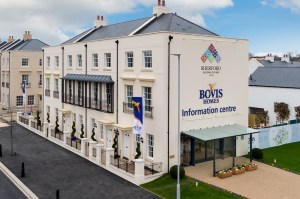
Developer Bovis too poor to finish Axminster estate – and “steep slopes” came as a surprise (and Owl says ‘I told you’!)

Owl predicted problems with this development LONG ago:

Axminster regeneration

Recall the site was acquired below market value when Axminster Carpets got into difficulty.

And it seems that Bovis has its own troubles:

Bovis slow down will hit East Devon hard

Although again Owl drew attention to another problem affecting house sales on the site:

Axminster and Cranbrook – slums of the future says Councillor Hull whilst Councillor Moulding says – nothing

So, it’s hardly surprising we find that Bovis blames everyone but themselves for their so- called plight – though its directors are probably not too worried about their bonuses:

New Bovis Homes boss buys extra £2m shares

“HOUSE building on the Bovis Homes Cloakham Lawn estate could cease unless planning conditions are removed or eased.

Bovis Homes says the scheme is in the process of stalling and, unless it can be brought back into viability, the company will have “no option but to cease work and mothball the development”.

But Axminster Town Council feels it is an attempt by the developer “to wriggle out of its commitments”, with district councillor Ian Hall saying: “‘Trying it on’ comes to mind.”

Bovis Homes has submitted a planning application to East Devon District Council (EDDC) to vary the Section 106 agreement (a set level of affordable housing and contributions towards the local infrastructure and facilities).

The development includes permission for up to 400 dwellings, and the company celebrated the second anniversary of its on-site sales office in September last year.

But a summary of an independent viability assessment, produced by chartered surveyor Belvedere Vantage Ltd, says: “The local market in Axminster has proved very difficult, with interest in the first phase of the development having slowed significantly, resulting in a large number of completed unsold ‘standing units’.”

The summary also referred to a number of physical constraints at the site, and “potential abnormal costs” associated with the constraints, which started to become clear during detailed site investigations after outline planning permission had been given.

Constraints include areas with very steep slopes, a flood plain boundary, two distinct drainage catchments, a watercourse running through the site, the need to maintain access to existing leisure facilities.

The negative impacts, including an inability to plan the scheme effectively, of a tree preservation order are also mentioned.

Axminster Rural district councillor Ian Hall, having declared an interest as he is the chairman of Cloakham Lawn Sports Centre (a Bovis Homes tenant), said in a formal response: “I have absolutely no sympathy.

“This land was purchased by Bovis for £2.9m cheaper than the market price when the failing Axminster Carpets Ltd was winding up.

“Bovis representatives (who were the strong arm of Bovis during the purchase of the land) were very aware of the agreements and were more than happy to proceed with the bargain of the decade.

“I am not one to make unnecessary fuss, although, on this issue, I will not compromise.

“ ‘Trying it on’ comes to mind.”

The independent viability assessment is confidential because it contains commercially sensible information, which is not included in the publicly available summary.

Axminster Town Council has requested more detailed confidential information and, in its formal response to EDDC, said: “The town council objects to this application, which appears to be an attempt by the developer to wriggle out of its commitments.

“There is insufficient information on which to make a well-reasoned response.”

The town council requested a meeting with EDDC and the developer so that it would be able to “respond in the light of more detailed, commercially confidential information”.

The town council also requested a site meeting in the company of a planning officer.

Town clerk Hilary Kirkcaldie said EDDC replied it could not share confidential information, but had appointed an independent viability consultant.

EDDC also expressed a willingness to host a site visit, which is yet to be arranged.

In her formal response to the application, EDDC housing strategy officer Melissa Wall said: “We are disappointed that the applicants have not approached the council before submitting their application to vary the S106 contributions to discuss their viability concerns.

“We are open to suggestions regarding changing the tenure and numbers of affordable units in order to assist viability.

“We are hopeful that agreement can be reached between the council and the applicant to ensure that the development can support some form of affordable housing.”

Bovis Homes would not say how many houses have been built and how many are under construction – nor would the company comment on Councillor Hall’s claims.

A spokesperson said: “We cannot comment on live viability applications but we will continue to work closely with the local authorities to deliver the new development at Axm- inster, which is providing much-needed new homes as well as an economic boost and jobs for the area.”

https://www.viewnews.co.uk/housing-development-axminster-stop/

“Inclusive growth” or exclusive growth in East Devon (soon to be Greater Exeter?)

Greater Exeter or Greater East Devon?

A follow-on from the previous post.

“Inclusive growth is emerging as a key agenda in the UK. The general election was fought from both sides with a promise to create an economy that works for everyone.

City leaders across the country are pursuing inclusive growth as a means for addressing some of the big challenges facing their communities, from poor health and economic exclusion to high demand for services and spiralling financial pressures. Our report, Citizens and Inclusive Growth

Click to access rsa_citizens-and-inclusive-growth-report.pdf

explores how we can build on this agenda and support impactful next steps by engaging citizens as part of our strategy for inclusive growth.

The RSA Inclusive Growth Commission set out a bold vision for a new model of growth that truly moves on from the failed trickle down economics of the past. But it also identified a critical gap in current thinking and practice around alternative economic models: the role that citizens should play in shaping them. A “place based” economy is unlikely to succeed without active citizen and community participation. The RSA’s Citizens’ Economic Council has underlined the real value created by getting citizens involved in shaping economic thinking and policy, both in terms of the quality of decision making and the positive effect it has on people’s skills, as well as their sense of agency, self-efficacy and belonging to their place. …

So how can we take the agenda forward in the UK? It’s clear that citizens aren’t featuring enough in conversations and decisions about devolution and strategies for economic growth and development. The parameters of inclusive growth are largely being set by officials, which has meant that too often we are tinkering at the edges of existing growth models rather than transforming them. Evidence from the report suggests greater involvement of a broad range of citizens (especially those with lived experience of hardship and poverty) may have a transformative effect on priorities and policies for growth, encouraging greater equity and sustainability.

There are ways that government and cities could demonstrate their commitment to citizen engagement in pursuit of inclusive growth. One of our suggestions is that in future phases of devolution, localities should negotiate significant devolved funds that are controlled by their citizens through participatory budgeting. The same could apply to the programmes that ultimately replace EU structural and social funds after Brexit.

Inclusive growth should go hand in hand with an inclusive form of decision making. Towns and cities in the UK have a real opportunity to make this happen. “

https://www.thersa.org/discover/publications-and-articles/rsa-blogs/2017/07/give-citizens-real-power-for-inclusive-growth-to-succeed

Is it time for some more rebellious towns?

Colyton proudly announces itself as “the most rebellious town in Devon” for its part in supporting the Duke of Monmouth against James the Second.

Is it now time for another rebellion?

EDDC is the largest District Council in Devon with a population of about 140,000. It is growing rapidly. All this is happening against the backdrop of relocating EDDC’s headquarters and possible mergers amongst councils, in particular the creation of Greater Exeter.

Does everyone in East Devon want to be part of this process of rapid population growth and incorporation into the Exeter conurbation?

Residents of Exmouth, Honiton and Cranbrook may well look towards Exeter and work in the city, but our more rural and coastal communities increasingly see crowded and congested Exeter as something of which they do not wish to be a part. They tend to look towards the slower population growth and protection of the environment that can be found across the border in Dorset.

Budleigh Salterton, Sidmouth, Beer, Colyton and Seaton, and perhaps Ottery, seem to see themselves more as operating in an economy linked primarily to tourism and agriculture. They have no wish or requirement to be absorbed into the Exeter behemoth. Cleaner and greener.

These communities also have little representation in the hierarchy at Knowle, (or even acknowledged by Greater Exeter) where the leadership is dominated by councillors from Exmouth, Honiton and Axminster.

In such circumstances, and with relocation offering a timely opportunity, is it not time to seriously consider splitting the District Council and introducing a healthy dose of localism?

We already see many functions and services involving cross-authority cooperation. Such sharing of services could and should continue were coastal East Devon to secede. But those coastal communities would have far greater control over their own affairs.

Is it time for Eastern East Devon, or perhaps “Jurassic Devon”, to secede from EDDC and withdraw from the Greater Exeter project?

And maybe join with Dorset’s idea of a Jurassic National Park?

All it takes is a few rebellious people to get it started!

On-the-spot fines: has anyone been in-the-spot to fine anyone?

The by-law enacted by EDDC regarding feeding seagulls has hit national headlines again:

http://www.express.co.uk/news/uk/840603/Seagull-attacks-feeding-birds-fine-food

But has anyone ever been fined?

Same with dog fouling – the fouling is still there but where are the fines?

Perhaps Neil Parish should be spending less time on widening the A303 and more time on making the A35 safer

Many of us know the disaster that is the Hunter’s Lodge interchange near Axminster and its catalogue of accidents and deaths.

Now there have been three serious accidents on the same road, all near Kilmington.

http://www.devonlive.com/third-crash-in-three-days-on-a35-between-honiton-and-axminster-after-car-and-motorbike-collide/story-30480246-detail/story.html

Swire might also start thinking about his side of the A3052, which has seen two accidents (one fatal) at Four Elms in recent days:

https://eastdevonwatch.org/2017/08/04/tory-councillor-agrees-with-comments-by-independent-councillor-a-first/

Of course, there is no money for road repairs or improvements in East Devon – all money in our area is being poured into roads to Hinkley C, widening the A303 and nationally into shaving off 20 minutes on journeys between London and Birmingham.

Priorities, dear boy, priorities.

Devon County Council councillor responsible for Highways – former Monster Raving Loony Party representative Stuart Hughes:

102 Temple Street
Sidmouth
Devon
EX10 9BJ
01395 578414
stuart.hughes@devon.gov.uk

The money is there – just not here!

Hospital staff shortages causing dangerous “nursing on the cheap”

Owl says: 20 people in a hospital ward being looked after by, say, 4 staff – 1 member if staff to 5 people, 3 shifts a day = 12 nursing staff. That’s with FULL staffing (plus, of course, other staff such as doctors, physios, etc). 20 people under their eagle eyes, at least one of them professionally qualified, assessing their needs, watching for deterioration, alert for emergencies.

If all those 20 people are being nursed at home – how would those same 12 staff care for the same 20 people in a dispersed rural geographical area? Which ones would get care from the qualified nurse, which ones the “cheap” alternative? No more staff – because already there is a shortage. And using their own cars (if they drive and can afford one) to get between them all, summer tourist season and winter snow.

In this government’s eyes, land to sell off to fund vanity projects and line pockets is more important than people being cared for when they are sick.

“Nearly all England’s 50 biggest hospital trusts are failing to hire enough nurses to ensure patients are safe.

Nine in 10 of the trusts, which oversee 150 hospital sites, are not meeting their own safe staffing targets, according to analysis by the Royal College of Nursing (RCN).

The data also suggest nurses are being increasingly replaced by cheaper, unqualified healthcare assistants.

To cope with the shortage of nurses, more than half the largest hospitals (55%) brought more unregistered support staff onto shifts, the figures show. The situation is worse at night, with two thirds (67%) of hospitals using unregistered support staff — which critics claim will lead to higher patient mortality rates.

Janet Davies, chief executive and general secretary of the RCN, said patients can pay the “very highest price when the government encourages nursing on the cheap”.

She added: “Nurses have degrees and expert training and, to be blunt, the evidence shows patients stand a better chance of survival and recovery when there are more of them on the ward.”

A separate study of staffing in NHS hospitals, published in the online journal BMJ Open, found that in trusts where registered nurses had six or fewer patients to care for, the death rate was 20% lower than where they had more than 10.

Hospitals have had to publish staffing levels since April 2014 in response to the scandal at Stafford Hospital, where hundreds died from neglect.

The RCN analysis, which calculates the average fill-rate across the month, reveals the worst affected site was the Royal Blackburn Hospital, which had on duty only three quarters of the nurses needed.

According to the RCN there are 40,000 nurse vacancies. Brexit, low morale, the end of bursaries for tuition fees, and the public sector pay freeze have all been blamed.

The Department of Health said: “Just this month we announced an extra 10,000 places for nurses, midwives and allied health professionals by 2020, and there are over 12,500 more nurses on our wards since 2010.”

Sunday Times (pay wall)

The Swamp UK-style: David Davis – 6 days work a year for a pal – £34,000 and help to cancel a £450,000 fine

“David Davis backed a City high-flyer’s appeal against a huge fine for insider dealing a month after accepting a lucrative position at one of his companies, the Observer has established.

The Brexit secretary has been a staunch ally of star banker Ian Hannam for many years. Both men were members of 21 SAS Reserve Regiment and Hannam donated £2,000 to Davis’s Tory leadership campaign in 2005. But their relationship deepened in 2012 when Davis criticised the Financial Services Authority in its pursuit of the City’s leading dealmaker, who was forced to leave his job with JP Morgan after being found guilty of “market abuse”.

The £450,000 fine imposed by the FSA (replaced by the Financial Conduct Authority or FCA in 2013) was one of the largest handed down to an individual and was considered a major coup for the authority. But Davis described its action as “unBritish”. He said at the time: “This is an incredible extension of what constitutes insider trading by the FSA. It’s quite an astounding pattern of behaviour by the FSA.”

Ian Hannam, former global chairman of equity capital markets at JP Morgan, was fined £450,000 by what was then the Financial Services Authority.

When the authority first brought the case against Hannam, Davis had no financial relationship with his friend, who was considered one of the most powerful people in the Square Mile for his ability to make deals happen. But this was to change a year later when Davis was appointed to the supervisory board of a German company, Mansfelder Kupfer und Messing (MKM), which describes itself as the “leading European manufacturer of primary and semi-finished products made of copper and copper alloy”.

Davis listed his position – for which he “anticipated remuneration of approximately £34,000 per annum” – in the register of MPs’ interests on 10 June 2013 and disclosed that the role was for six days work a year. The disclosure was made a month after Hannam bought MKM via a company called Copper 1909. MKM confirms on its website that it is owned by Hannam & Partners.

In further updates to the register of interests, Davis acknowledged that he received a series of payments from Copper 1909 – each for around £7,000 – until he stood down from the company on becoming Brexit secretary last year. The Observer estimates that he may have earned more than £100,000 from the arrangement, based on his anticipated remuneration of £34,000 a year.

In July 2013, a month after he accepted the position at MKM, Davis made a very public show of support for Hannam when the banker sought to have the FSA’s decision overturned. The former shadow home secretary sat behind his friend, formerly JP Morgan’s global co-head of UK capital markets, when his appeal was heard. The FSA’s decision to fine Hannam was upheld in 2014 by the upper tribunal, the ultimate arbiter of authority decisions. There was no suggestion that Hannam was acting for private gain and he was granted a licence to continue operating in the Square Mile after the decision was handed down.

The FSA’s case against Hannam was based on two emails in which he revealed that his client, Heritage Oil, had struck oil before the discovery had been announced publicly, and that it was a potential bid target.

Commenting after the appeal was dismissed, Tracey McDermott, then director of enforcement and financial crime at the FCA, said: “This has been a long and complex case but the tribunal’s substantial judgment is a landmark. It should leave market participants in no doubt that casual and uncontrolled distribution of inside information is not acceptable in today’s markets. Controlling the flow of inside information is a key way of preventing market abuse and we would urge all market participants to pay close attention to the judgment.”

Davis was one of several people Hannam thanked for their support after the tribunal’s ruling.

The Observer put a series of questions to Davis, including requests for him to confirm how much he had been paid by Hannam’s company, what the work entailed and whether he believed the position had opened him up to any conflicts of interest. Davis declined to comment. However, his friends said he has made no attempt to hide his friendship with Hannam and that all his appointments, and income received, have been declared in accordance with MPs’ rules.

The Observer approached the Committee on Standards in Public Life. A spokeswoman said it would not comment on individual cases but confirmed that the committee was exercised by the issue of MPs holding second jobs.

The spokeswoman said: “We are currently collecting evidence and will feed our findings into the review of the MPs’ code of conduct in due course.”

https://www.theguardian.com/politics/2017/aug/12/david-davis-linked-to-city-trader-fined-for-insider-dealing

Lung cancer rates among non-smokers doubles – ? pollution

It rather fits in with ex-Vice-President and environmental campaigner Al Gore’s description of the skies above us as “vast outdoor open sewers”.

“Lung cancer rates among non-smokers have doubled over the past decade amid concerns that high levels of air pollution lie behind the rise, a study shows.

The number of lung cancer deaths among people who have never smoked will overtake deaths from smoking- related cancer within a decade if the trend continues, according to the UK’s largest cancer surgery centre.

Researchers worry that this shift would make the condition, which is the deadliest form of cancer, even harder to diagnose and treat in time. There are 46,400 new cases and 36,000 associated deaths in Britain each year, and only one in 20 patients survives for more than ten years.

Lung cancer has overwhelmingly been linked to cigarettes, which caused about nine out of ten cases. As smoking rates have fallen to a record low, however, specialists at the Royal Brompton Hospital and Harefield NHS Trust in London have seen a substantial increase in the number of operations they are performing on non-smokers.

Other researchers said they had yet to see any sign of the trend, and there is little rigorous national data on whether lung cancer patients ever smoked. However, a similar rise was recently identified by three big hospitals in America. Eric Lim, a consultant thoracic surgeon, said he was confident that his team had identified a new and troubling phenomenon.

Between 2008 and 2014 the number of lung cancer patients treated at the centre remained constant at about 310 a year, but the proportion of people who had never smoked climbed steadily from 13 to 28 per cent, rising from fewer than 50 never-smokers to nearly 100 a year, 67 per cent of whom were women.

Mr Lim said that the reasons for this change were unclear but air pollution was a strong candidate. The International Agency for Research on Cancer has classified fine particles such as soot as a carcinogen, and Cancer Research UK estimates that pollution accounts for 3,500 cases of lung cancer each year. Another possible explanation is better detection of tumours through scans for other diseases.

Mr Lim said the rise of lung cancer in people who had never smoked could lead to a higher death rate because it was harder for doctors to spot the disease early without the red flag of a cigarette habit. Even now only 21 per cent of cases are diagnosed by GPs, compared with the 35 per cent that are discovered at accident and emergency wards.

The Royal Brompton group plans to launch the first clinical trials of a “liquid biopsy” blood test next year that could catch fragments of DNA shed by lung cancer months or years before the most serious symptoms appeared.

Some experts argue that the study, which involved 2,170 patients and is published in the European Journal of Cancer, is too small to be truly reliable.

Stephen Spiro, a former head of respiratory medicine at University College Hospital and an honorary adviser to the British Lung Foundation, said: “There is no good evidence that lung cancer is becoming commoner in never-smokers.” He added: “Lung cancer will become more frequent in never-smokers as a proportion, as smoking cancers begin to decline.”

Mr Lim stood by his findings, saying that Britain was not good enough at monitoring lung cancer rates to have spotted the trend.”

Source: The Times, pay wall

“Conduct of health committee members investigated by Devon council” – Diviani and Randall-Johnson heavily criticised for behaviour

“Devon County Council has confirmed it is looking into the conduct of members of one of its committees following a debate and vote not to refer a decision to close 72 community hospital beds in Devon to the secretary of state for health.

The matter was debated by the health and adult care scrutiny committee meeting at Exeter’s County Hall on July 25.

Among those who have expressed their concerns is Val Ranger, East Devon District Council ward councillor for Newton Poppleford and Harpford.

She says that at a meeting of East Devon District full council meeting on July 26, Cllr Paul Diviani, who sits on the committee as a representative of district councils, admitted he had not asked the opinion of other district councils about whether they wished to refer the decision to close local hospital beds to the secretary of state, and could offer no evidence on that basis that he was representing their views.

At the meeting Cllr Diviani was among those who voted not to refer the decision to the secretary of state.

Cllr Ranger said: “He said he voted not to because it was unlikely that the secretary of state would overturn the decision.

This seems duplicitous on two count. The first for failing to adequately represent the views of the district councils.

“Secondly for assuming the role of the secretary of state by stating there was no point in referring the matter to him as he was unlikely to overturn the decision.

“At the EDDC scrutiny committee on June 22, EDDC’s views and recommendations were very clear; Northern, Eastern and Western (NEW) Devon Clinical Commissioning Group (CCG) has failed to provide the evidence needed to support their plans.

“However, Cllr Diviani failed to represent those views or the views of other district councils as he did not seek them. He has admitted he voted independently of both EDDC and other district councils, rendering his vote as entirely without integrity in his role at the DCC meeting.

“The vote is an entirely unsafe and undemocratic way of conducting business and brings both EDDC and DCC into disrepute.”

A spokesman for Devon County Council said: “We have received a number of comments, representations and complaints about the health and adult care scrutiny committee held last week and about the conduct of members at that meeting.

“We will be looking at all the points raised by Cllr Ranger and others under our normal procedures to see if there are any issues to be addressed.”

However, Cllr Diviani is confident the investigation by DCC will conclude there has been no wrong doing.

He said: “I take this predictable and entirely politically motivated complaint against me by people who contribute little or nothing positive to the debate at face value, and feel sure that DCC will dismiss the allegations as unfounded.

“I have neither seen or heard anything from Ms Ranger on how her party would address the huge challenges facing the NEW Devon CCG and the NHS.

“As the web cam at County Hall malfunctioned and didn’t record properly, the gist of what I said is as below. I did also explain that my position on that scrutiny committee is by virtue of my being elected by the other leaders of all the Devon districts to represent the county-wide views of the district councils, not just East Devon, and is a function I perform regularly both locally and in London through the District Councils Network where I represent the South West.

“There is a tendency to assume that everything is fine as it is, when it quite clearly is not, and that the government will keep throwing money at the NHS as they always have in the past.

“What that underestimates are the social care costs which are massive, but if tackled correctly will reduce the acute care costs, as evidenced by the Kings Fund report. We will still need our hospital buildings which in Honiton are already being used differently, for example, for kidney or chemotherapy treatments. Staffing is still a problem but that is not building dependent.

“Many of us have made a positive decision to live and indeed work in the countryside and a direct result of that decision is a diminution of accessible services we can reasonably expect the state to provide. When able, it is a price we gladly pay for the quality of life afforded.

“In straightened times, we need to cut the cloth accordingly. As is well documented, the largely under funded cost of adult social care is a significant factor in the problems besetting the NHS where the acute care service is the treatment of last resort, and very good it is too, but with the budget sliced off to the top tier local authority.

“As the truly excellent Kings Fund Report from 2016 made exceedingly clear, sorting adult social care comes first and if we tackle that with the help of the district councils the benefits will flow. The NHS cost pressures will diminish and the money can best be spent where most needed.

“In East Devon we have enormous and justifiable pride in our local hospitals and all our existing towns were well endowed. Costs are, however, never static and will always rise without innovation.

“But here we are talking service industry which is always people dependent and where low wages do not necessarily translate into low cost. Simply put, if one person falls, it will take two people to rectify the situation, and if not rectified speedily, the condition and costs multiply exponentially.

“And speedily must mean access to care, quickly. Our travel times are well known and until they are resolved, we will always need staging posts to either stop people occupying the acute provision when unnecessary or to maintain them in a degree of comfort until they can reach the comfort and safety of their own living space.

“The major flaw appears to me to be the ever present ‘one size fits all’. Flexibility is key and our response should be the start.

“Attempting to browbeat the secretary of state with a demand to overturn his own policies is counter intuitive. I prefer to ask him to rural proof our rural situation before allowing any further reductions in service which we on the ground can see will be detrimental, but our transformers would discount. But that is a local decision which should be made locally.”

Also among those who have raised concerns over the debate and vote at the scrutiny meeting is Claire Wright, Devon County Councillor for Otter Valley Ward.

She has said how she was “disappointed” by the behaviour of scrutiny committee chair Sara Randall Johnson who “appeared to do her utmost” to prevent any referral.

She said: “I am also disappointed with the attitude of the majority of the Conservative group who used a variety of ill-informed views and remarks to justify their determination not to refer, refusing to hear or see any member of the public’s distress, frustration and disbelief at the proceedings.

“The chair’s attitude made me angry and led to a protracted row where I repeatedly asked her why she had allowed a proposal to be made and seconded at the very start of the meeting by her conservative colleague, Rufus Gilbert, not to refer to the secretary of state for health, when I already had a proposal that I had lodged with her and the two officers, before the meeting.”

She added: “When they did what they did at the health scrutiny meeting, the Conservatives betrayed thousands of local people.”

The close vote whether to refer the decision was six votes to seven, with two abstentions. All those who voted with Cllr Gilbert’s motion were Conservative’s.

Cllr Wright, who is seeking advice on what happened at the meeting, concluded: “I am quite certain that with a different approach by the chair the outcome would have been different, and local peoples views would have been respected and acted upon.”

http://m.devonlive.com/conduct-of-health-committee-members-investigated-by-devon-council/story-30478465-detail/story.html